

Southern California homeowners know how intense the sun can be. From bright coastal glare in La Jolla to inland heat in El Cajon and Chula Vista, sunlight is a year-round factor in comfort and energy costs. Many homeowners start researching window tint for house windows when they notice rising utility bills, fading floors, or rooms that are simply too warm to enjoy.
Below, we answer the most common questions San Diego homeowners ask before moving forward with residential window film.
Why Do Homeowners in San Diego Choose Window Film?
The biggest driver in Southern California is heat and glare. Homes in areas like Pacific Beach, Del Mar, and Mission Valley often have large glass surfaces designed to maximize views. While beautiful, those windows can allow significant solar heat gain.
Residential tinting helps:
-
Reduce interior heat buildup
-
Minimize glare on TVs and computer screens
-
Protect furniture, hardwood floors, and artwork from fading
-
Improve daytime privacy
-
Enhance overall energy efficiency
In warmer inland areas such as Poway or Santee, solar control films can significantly improve indoor comfort without replacing windows. Instead of closing blinds all day, homeowners can keep natural light while reducing harsh sunlight.
How Does Home Window Tinting Actually Work?
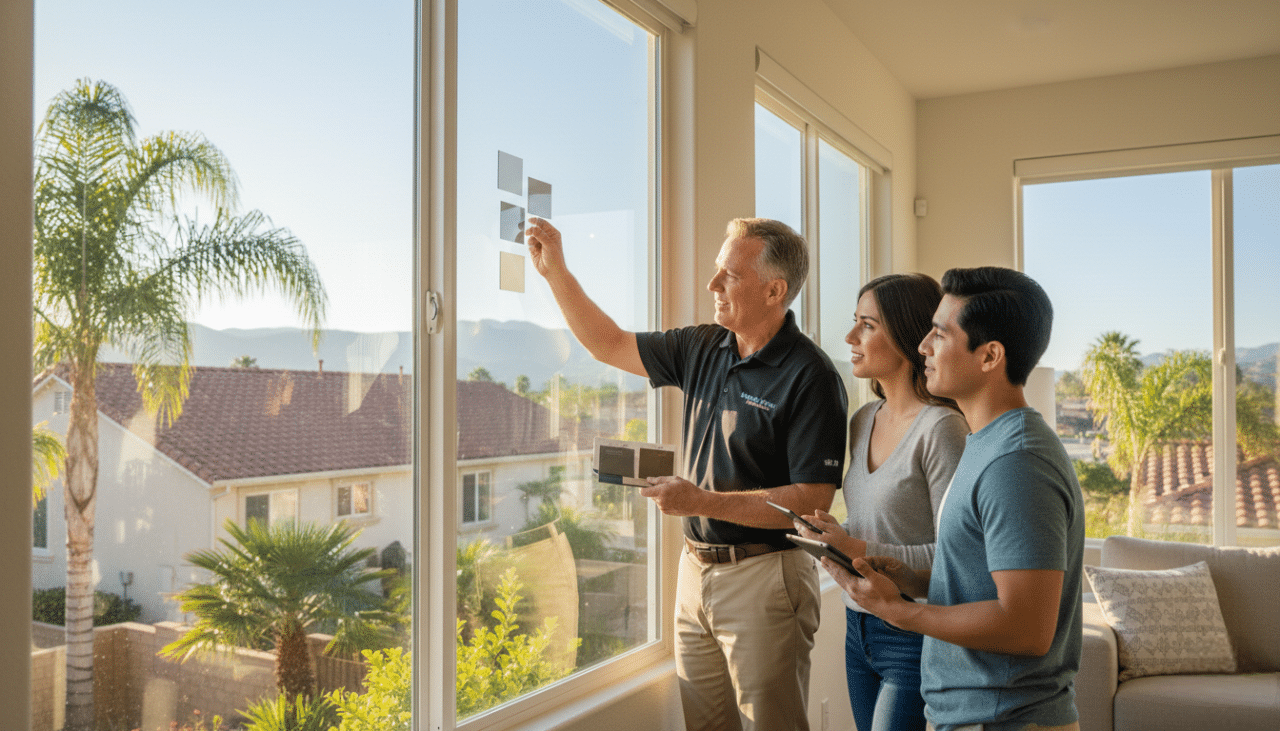
Modern window films are engineered with multiple thin layers of polyester and metalized or ceramic coatings. These layers selectively filter sunlight by:
-
Reflecting infrared heat
-
Blocking up to 99% of harmful UV rays
-
Reducing visible light glare
-
Improving glass strength in some cases
Unlike old, dark automotive-style films, today’s residential options come in a range of finishes. Some are nearly clear and focus on UV protection, while others offer reflective exteriors for added privacy.
For San Diego homes with ocean views, low-reflective ceramic films are popular because they preserve visibility while cutting heat. Inland homeowners often choose slightly more reflective options for stronger heat rejection.
Is It Better Than Replacing Windows?
Many homeowners assume full window replacement is the only way to improve efficiency. In reality, upgrading glass can be expensive and disruptive.
Tinting offers a cost-effective alternative with several advantages:
-
Lower upfront investment
-
Faster installation
-
No structural renovation required
-
Immediate comfort improvement
In Southern California’s climate, adding high-performance film to existing dual-pane windows can dramatically reduce solar heat gain without replacing frames.
However, if windows are damaged, drafty, or outdated single-pane units, replacement may be worth considering first. A professional evaluation helps determine the right approach.
Will It Make My Home Too Dark?
This is one of the most common concerns. Many people worry that tinting will make their living space feel dim or gloomy.
Modern residential films are designed to balance light and heat control. Options range from nearly invisible UV-blocking films to medium-shade solar control films that reduce glare without darkening the space excessively.
In coastal neighborhoods like Encinitas or Carlsbad, homeowners often prefer lighter films that maintain brightness. In hotter inland communities such as Escondido, slightly darker films can significantly improve comfort while still allowing natural light.
A professional installer can show samples on your actual glass, so you can see how each option looks before committing.
How Much Does It Cost in Southern California?
Pricing depends on several factors:
-
Type of film selected (ceramic, reflective, security, decorative)
-
Number and size of windows
-
Accessibility and installation complexity
-
Existing window condition
In San Diego County, residential tinting projects typically range from a few hundred dollars for small areas to several thousand for larger homes.
Although costs vary, many homeowners see measurable savings in cooling costs over time. Beyond utility savings, reducing UV exposure protects flooring, cabinetry, and upholstery, preventing costly replacement later.
When comparing quotes, ask about:
-
Warranty coverage
-
Manufacturer certification
-
Installer experience
-
Film brand quality
The lowest price is not always the best long-term investment.
How Do I Choose the Right Film for My Home?
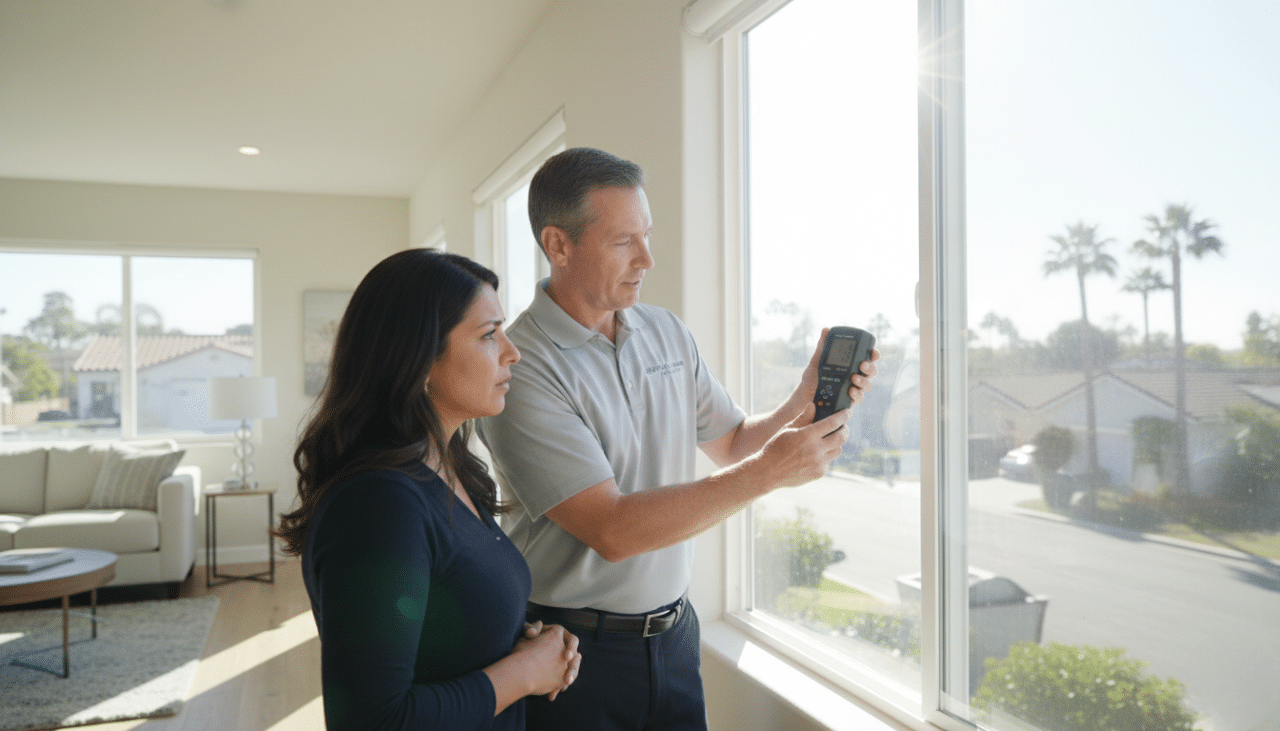
Choosing the right solution depends on your priorities. Consider these key questions:
Is heat reduction your main goal?
Look for high solar heat rejection and infrared-blocking performance.
Do you want added privacy during the day?
Reflective films can create a mirrored exterior appearance while maintaining interior views.
Is safety or storm protection important?
Security films add strength to glass and help hold shards together if the glass breaks.
Are aesthetics a priority?
Neutral ceramic films maintain a clean, modern look without heavy reflectivity.
For homeowners in San Diego and Southern California, climate and sun exposure direction matter. South- and west-facing windows typically benefit most from stronger solar control.
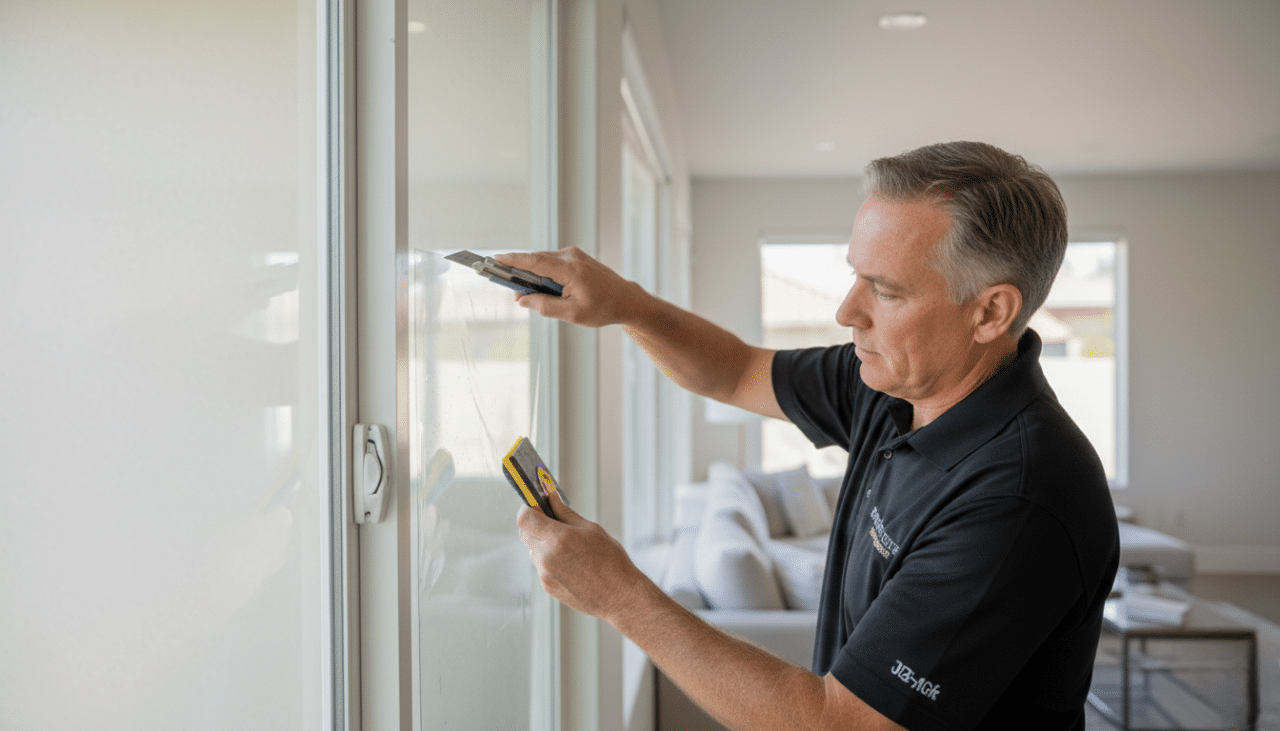
Working with a professional installer ensures proper film selection, correct application, and manufacturer-backed warranty coverage. Improper installation can cause bubbling, peeling, or damage to glass, especially in dual-pane units.
What to Expect During Installation
A typical installation process includes:
-
Cleaning and prepping the glass
-
Precision cutting the film
-
Applying the film using a professional solution
-
Squeegeeing out air and moisture
-
Final inspection and curing period
Most homes in the San Diego area can be completed in a day, depending on the project’s size. After installation, slight haziness may appear for a few days as the film cures. This is normal and clears naturally.
Is It Worth It in Southern California?
With year-round sunshine and rising energy costs, many homeowners find residential tinting to be a practical upgrade. It improves comfort, protects interiors, and enhances privacy without sacrificing natural light.
For homes in areas like La Mesa, Coronado, and Rancho Bernardo, solar exposure is not seasonal—it is constant. Investing in high-quality film can help maintain a consistent indoor temperature and reduce reliance on air conditioning.
Before starting, schedule a consultation with a local professional who understands Southern California’s climate patterns and building styles. Seeing samples in your own home under real sunlight makes decision-making much easier.