
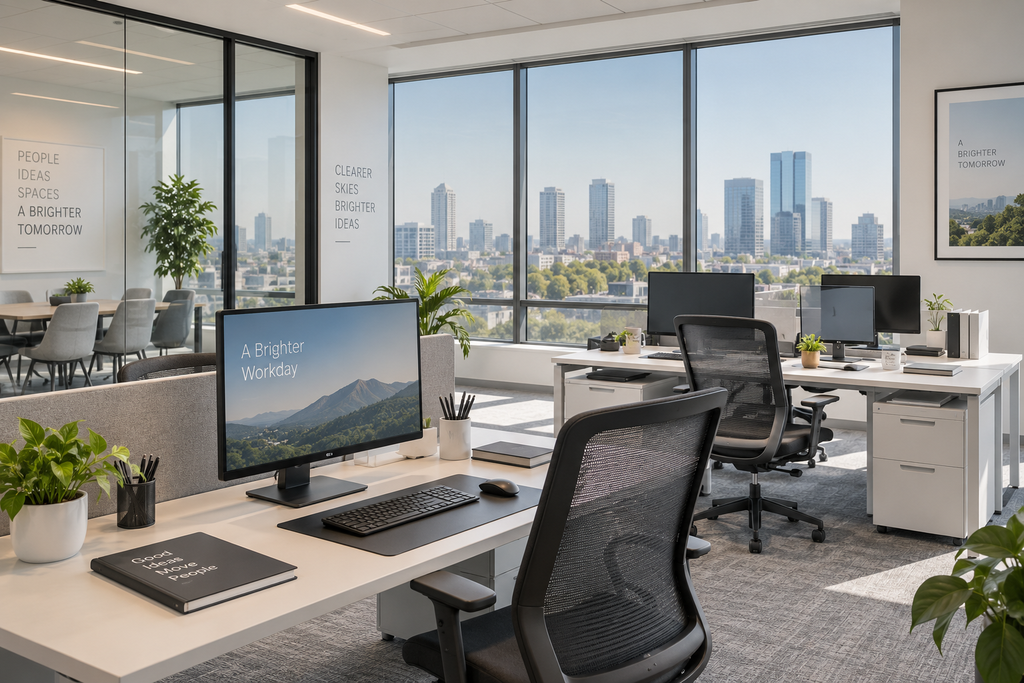
Commercial window film improves office comfort by blocking up to 99% of UV rays and rejecting a large share of solar heat, reducing glare and evening out hot and cold spots near windows. Security and safety films add a separate layer of protection by holding shattered glass together on impact, making break-ins and accidental impacts less likely to result in an open entry point or flying glass.
How This Relates to Superior Window Solutions
Superior Window Solutions installs commercial window film for offices, retail stores, and other commercial buildings across San Diego County, including solar control, security, privacy, decorative, and custom tinting options. The company is currently offering a free ceramic film upgrade, a free skylight heat evaluation, and a free commercial estimate on qualifying projects.
Quick Takeaways
- Commercial window film can block up to 99% of UV rays and reject a significant share of incoming solar heat, easing the load on HVAC systems.
- Industry data points to roughly 10–30% savings on cooling-season energy costs after a professional film installation, with payback typically in two to five years.
- Security and safety films don’t stop glass from breaking, but they hold fragments together on impact, slowing forced entry and reducing injury risk from flying shards.
- Film comes in several distinct categories—solar control, security, privacy, decorative, and anti-graffiti—and offices often combine more than one type in the same building.
- Superior Window Solutions is currently offering a free ceramic film upgrade and free commercial estimate for qualifying projects.
- Superior Window Solutions has served San Diego County commercial and residential customers since 1998.
What Is Commercial Window Film?
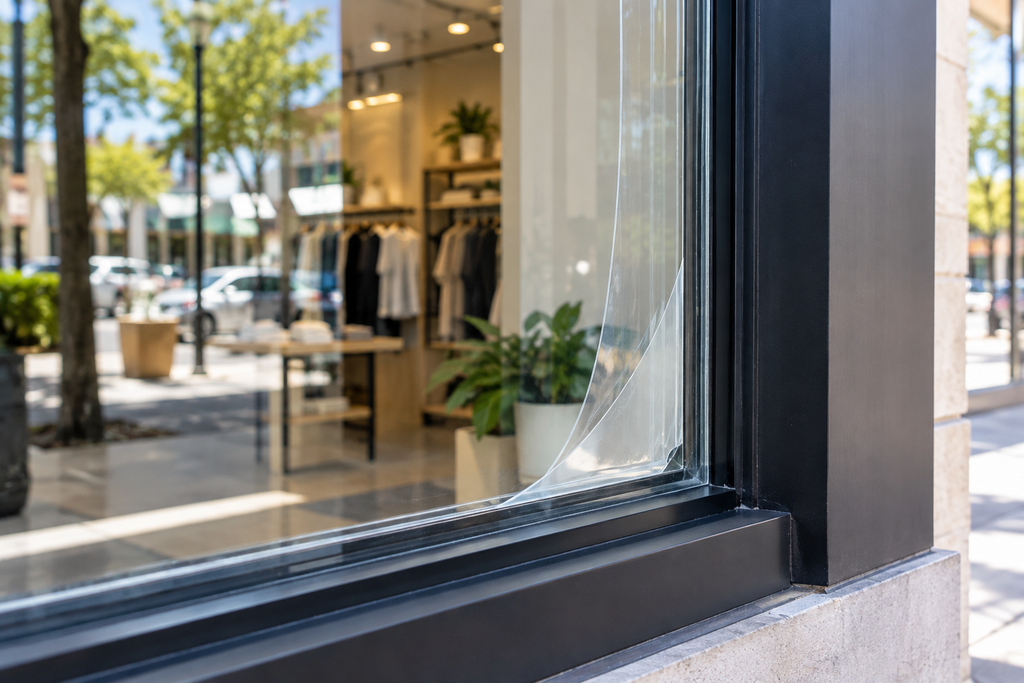
Commercial window film is a thin laminate, usually polyester-based, applied directly to the interior surface of existing glass to change how it handles light, heat, and impact. It’s a retrofit rather than a glass replacement, so it can typically be installed without construction downtime.
Once applied, film changes how the window performs without changing the window itself. Solar control layers reflect or absorb portions of the solar spectrum before they reach the interior, while security layers add a shatter-resistant membrane bonded to the glass. Because it’s applied to glass already in place, film is generally faster and considerably less expensive than replacing windows to get similar performance gains.
How Does Commercial Window Film Improve Comfort in an Office?
Window film improves comfort by reducing heat and glare that pass through glass, cutting down on hot spots, screen glare, and temperature swings that make workstations near windows uncomfortable. Employees typically notice steadier temperatures across the floor plan and less need to fight with blinds to see their screens.
Untreated office glass, especially south- or west-facing glass, lets in direct heat and glare that create uneven temperatures across a floor plan — desks near the window run hot while the rest of the room stays cool, which pushes HVAC systems to overcompensate. Spectrally selective films block much of the heat-carrying part of sunlight while still allowing visible light through, so a room stays bright without the added heat load. This also reduces fading on furniture, flooring, and merchandise from prolonged UV exposure.
How Does Window Film Enhance Office Security?
Security window film reinforces existing glass by holding it together when it’s struck or shattered, slowing forced entry through doors and street-level windows and reducing the risk of injury from broken glass. It’s a common addition for ground-floor offices, retail storefronts, and any glazing that’s a likely entry point.
The film itself doesn’t make glass unbreakable — a determined intruder can still get through — but a bonded security laminate keeps the pane largely intact after an impact instead of scattering into shards, which buys time and removes the easy “smash and reach through” entry that ordinary annealed glass allows. This is why security film is often recommended alongside standard commercial applications like locks and alarm systems rather than as a replacement, and some formulations are built to meet forced-entry or storm-resistance testing standards used by government and institutional buyers.
How Much Does Commercial Window Film Cost?
Commercial window film pricing depends on square footage, film type, glass accessibility, and building height, with most single-story office and retail jobs falling in the low-to-mid four figures and larger multi-story buildings scaling up from there. Superior Window Solutions advertises residential and commercial tinting starting at $295–$325, though the two figures appear inconsistently across the site.
Cost Factors
- Film type: Basic solar control film costs less per square foot than ceramic, security, or decorative films.
- Glass area and accessibility: Ground-floor storefronts install faster and cheaper than upper-floor office towers requiring lifts or scaffolding.
- Building height: High-rise commercial jobs typically carry higher labor costs than single-story retail or office space.
- Film performance tier: Higher heat-rejection and higher-clarity films generally cost more than entry-level tint.
Return on Investment
Most commercial film installations pay for themselves within two to five years through reduced cooling costs, and some utilities offer rebates that shorten that window further. Because film delivers a meaningful share of a full window replacement’s energy benefit at a fraction of the cost, it’s often one of the most cost-effective retrofit measures for existing commercial glass.
How Much Can Commercial Window Film Save on Energy Costs?
Commercial window film typically saves 10–30% on cooling-season energy costs, with the exact figure depending on how much glass a building has and which direction it faces. The U.S. Department of Energy’s Energy Star program notes that energy is the single largest operating expense in commercial office buildings, making even modest percentage reductions meaningful over time.
| Building Feature | Typical Impact of Film |
|---|---|
| South/west-facing glass | Highest heat gain reduction and glare relief |
| Large glass storefronts | Noticeable cooling-cost and fading reduction |
| Skylights | Reduced heat gain and UV exposure in top-floor spaces |
| North-facing glass | Smaller energy savings, still reduces UV fading |
For buildings with substantial west-facing glass, some published case studies report even larger reductions — one national retail chain reduced electric lighting needs by over 50% after a film installation redirected natural daylight more efficiently, and a large public venue reported roughly $30,000 in annual cooling savings after installing a ceramic solar control film. Results like these are building-specific and shouldn’t be treated as guaranteed outcomes for every office.
What Types of Commercial Window Film Are Available?
Commercial buildings generally use one or more of five film categories: solar control, security, privacy, decorative, and anti-graffiti, each solving a different problem rather than one film doing everything.
Solar Control Film
Reduces heat gain and glare while blocking most UV rays—the most common choice for offices trying to lower cooling costs and protect interiors from sun damage.
Security Film
A thicker, bonded laminate designed to hold glass together on impact, commonly used on ground-floor storefronts, entry doors, and other likely break-in points.
Privacy Film
Frosted, patterned, or one-way options that block outside views into conference rooms or street-facing offices without sacrificing natural light the way blinds do.
Decorative Film
Etched, colored, or branded film used for aesthetics, wayfinding, or reinforcing a company’s visual identity on interior glass and storefronts.
Anti-Graffiti Film
A sacrificial outer layer applied over glass in high-vandalism areas; when it’s scratched or defaced, you replace the film instead of the underlying glass.
Is Commercial Window Film Worth It for Offices?
Commercial window film is generally worth it for offices with significant glass exposure, since the combination of energy savings, employee comfort, UV protection, and optional security benefits usually outweighs the upfront cost within a few years. It’s a lower-value investment for buildings with minimal glass or glass that’s already high-performance, low-e glazing.
| Situation | Recommendation |
|---|---|
| Office with large south/west-facing windows | Solar control film — highest energy and comfort payoff |
| Ground-floor retail or street-facing office | Add security film alongside solar control |
| Conference rooms or private offices | Privacy film |
| Building in a high-vandalism area | Anti-graffiti film on street-level glass |
| Already-upgraded, high-performance glazing | Lower priority; evaluate case by case |
What Should Businesses Expect During Installation?
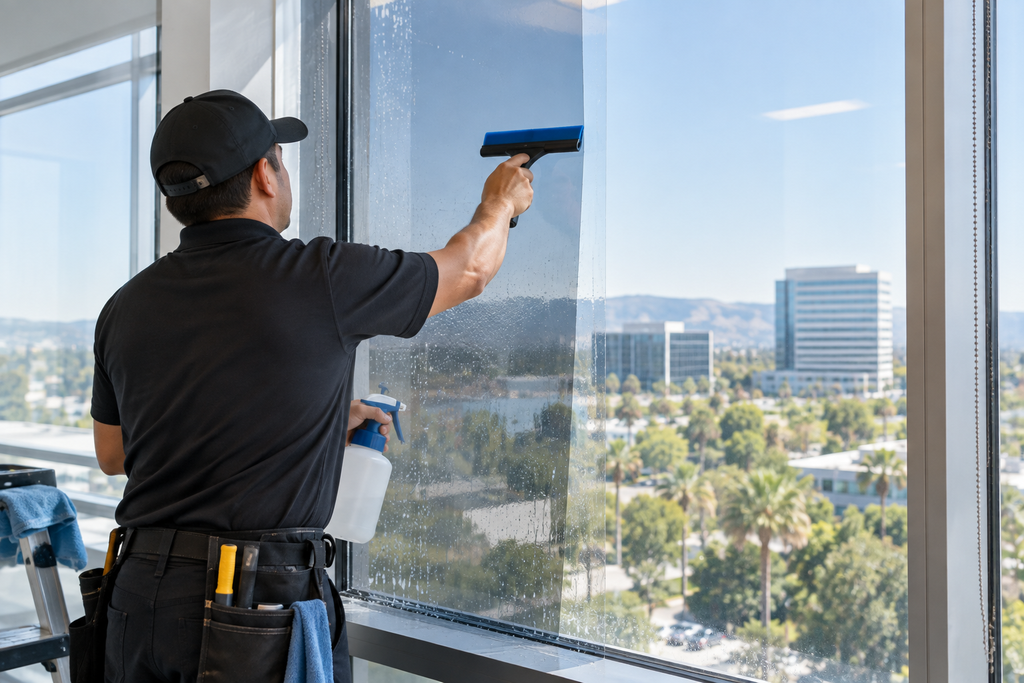
Businesses should expect a measure-and-prep phase, professional film application, and a drying period of up to several weeks, generally with little to no disruption to daily operations since the work happens at existing windows rather than requiring construction. Most jobs are scheduled during business hours or after hours to minimize disruption.
The process typically starts with measuring and cleaning the glass, then cutting film to fit and applying it with a bonding solution, followed by inspection for bubbles or misalignment. Superior Window Solutions notes that treated glass can take up to 60 days to fully cure and clear any temporary haze from the application liquid. Businesses should ask their installer for a specific timeline before scheduling work around it.
Why Choose Superior Window Solutions for Commercial Window Film?
Superior Window Solutions has served San Diego County businesses and homeowners since 1998, with a 5.0 average rating across dozens of verified reviews and a listed 100% satisfaction guarantee on its tinting work. The company installs solar control, security, privacy, decorative, and custom window film for offices, retail stores, and other commercial buildings throughout the region.
For businesses evaluating whether film makes sense for their building, Superior Window Solutions currently offers a free commercial estimate, plus a free ceramic film upgrade and a free skylight heat evaluation on qualifying projects. Because pricing and offer details can vary by project scope and change over time, confirm current terms directly with the company before committing.
Frequently Asked Questions
Does commercial window film actually stop break-ins?
No single film makes glass unbreakable. Security film holds shattered glass together on impact, which slows forced entry and reduces injury risk, but it works best alongside standard security measures like locks and alarms rather than replacing them.
How long does commercial window film last?
Quality commercial films are generally rated for a decade or more, though lifespan depends on the film grade, installation quality, and sun exposure. Ask any installer for the manufacturer’s specific warranty terms before purchasing.
Will window film make my office too dark?
Not necessarily. Spectrally selective films block heat-carrying wavelengths while still letting a high percentage of visible light through, so most offices stay bright while cutting glare and heat.
How much does commercial window film typically cost per project?
Cost depends heavily on square footage, film type, and building height, so it varies widely between a single storefront and a multi-story office tower. Superior Window Solutions advertises tinting starting at $295–$325, though get a firm quote for your specific building before budgeting.
Is commercial window film worth it if my building already has energy-efficient glass?
It can still help with glare, UV fading, and security, but the energy-savings case is weaker if the glass is already high-performance and low-e. It’s worth evaluating case by case with a contractor who can assess your specific windows.
Ready to Improve Comfort and Security at Your Office?
If glare, hot spots, or security gaps around your building’s glass are ongoing issues, a professional commercial window film assessment can identify the right combination of solar control, security, and privacy film for your space. Superior Window Solutions offers free commercial estimates for San Diego County businesses, along with current offers on ceramic film upgrades and skylight evaluations. Confirm current pricing and promotion terms directly with the company before booking to plan your budget accurately.