
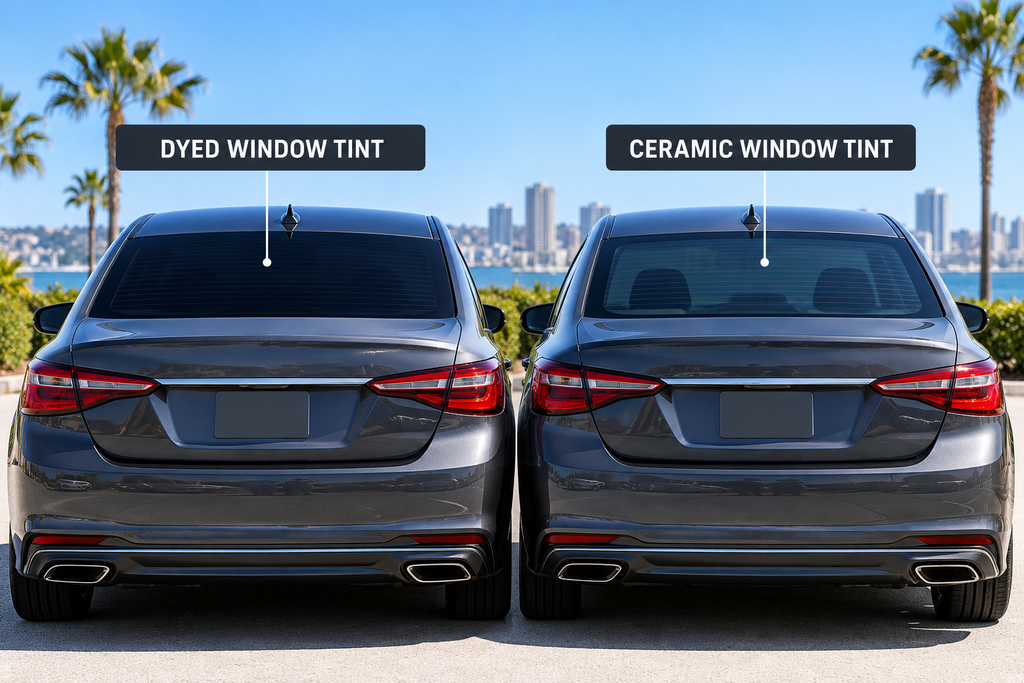
For most cars, the best window tint is a ceramic film in a shade your state allows. Judge films by how much heat they reject, measured as total solar energy rejection (TSER), rather than by darkness alone. Then match each window to the legal limit. In California, front-side windows must let at least 70 percent of visible light through, while rear-side and back windows can be as dark as you like.
For drivers across San Diego County, Superior Window Solutions installs automotive tint from its shop at 7960 Silverton Ave #122 in San Diego. The company offers standard dyed film plus three ceramic lines called Black Ceramic, Ceramic i3, and Air Ceramic, and every ceramic film it installs comes with a lifetime warranty. Its current automotive special is a Black Ceramic package for common sedans at $350 covering the sides and rear. Visit superiorwindowsolutions.com to see the latest promotions and discounts before you book.
Quick Takeaways
- Ceramic film rejects more heat than dyed film at the same shade and will not interfere with phone or GPS signals.
- Compare TSER and infrared rejection numbers, not just how dark a film looks.
- California requires at least 70 percent combined light transmission on front side windows, while rear windows have no darkness limit when the car has dual side mirrors.
- A lighter ceramic film can keep a car cooler than a darker dyed film.
- At Superior Window Solutions, ceramic car tint runs about $150 to $800 depending on the film and vehicle, with a $350 Black Ceramic package for common sedans.
What Types of Car Window Tint Can You Choose From?
Car window tint falls into four main families: dyed, metallic, carbon, and ceramic. Dyed film is the most affordable and mainly reduces glare. Metallic film reflects heat but can disrupt electronic signals. Carbon film improves on dyed film with better heat control and less fading. Ceramic film uses nonmetallic particles to reject the most heat at any shade without interfering with your electronics.
| Film Type | How It Works | Heat Rejection | Signal Interference | Best For |
|---|---|---|---|---|
| Dyed | Dye layer absorbs light | Basic | None | Tight budgets, glare and privacy |
| Metallic | Metal particles reflect heat | Good | Possible with phones, GPS and radio | Mostly replaced by ceramic today |
| Carbon | Carbon particles absorb infrared light | Better | None | Mid-range budgets wanting a matte look |
| Ceramic | Nonmetallic ceramic particles block infrared light | Best | None | Hot climates, daily drivers, modern cars with lots of tech |
Ultraviolet protection is rarely the deciding factor. Most quality automotive films block 99 percent or more of UV rays, including the dyed and ceramic films Superior Window Solutions installs. The real differences show up in heat rejection, optical clarity, and color stability over time. In California, mirror-style films are also off the table, since state law does not allow tint that reflects more light than standard glass.
Which Window Tint Blocks the Most Heat?
Multilayer ceramic film blocks the most heat. Superior Window Solutions publishes heat-rejection figures for each line: standard dyed film rejects 30 to 43 percent of total solar energy, Black Ceramic rejects 47 to 63 percent, and Ceramic i3 rejects 56 to 71 percent, with 93 percent infrared rejection. Even the lowest ceramic figure beats the best dyed figure.
Three numbers matter when you read a film’s spec sheet:
- VLT, or visible light transmission: how much visible light passes through. A lower number means a darker film.
- TSER, or total solar energy rejection: how much of the sun’s total energy the film keeps out. This is the best single measure of how cool your car will stay.
- IR rejection: how much infrared light the film blocks. Infrared is the part of sunlight you feel as heat on your skin.
Darkness and heat rejection are separate qualities. A dark dyed film mostly absorbs visible light, so it looks dark without stopping much infrared heat, while a ceramic film targets infrared directly. That is why a light ceramic can feel cooler than a much darker dyed film. When comparing quotes, ask for the TSER of the exact shade you plan to install, since performance changes from shade to shade within the same film line.
How Dark Can You Legally Tint Car Windows in California?
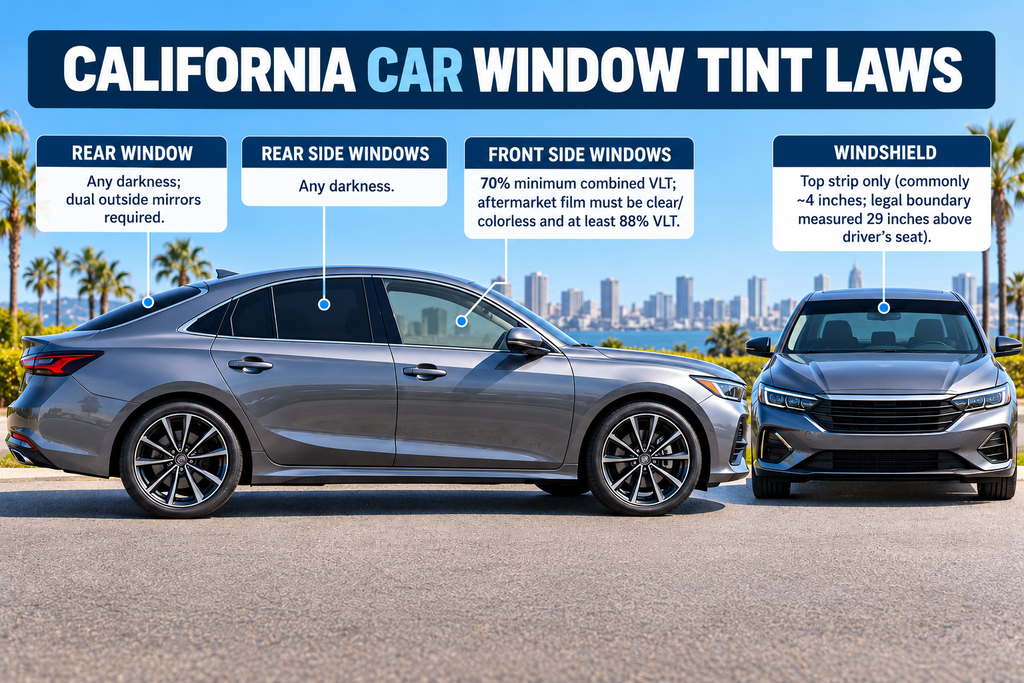
Under California Vehicle Code 26708, front side windows must allow at least 70 percent of visible light through, including the factory glass and the film. Rear side windows and the back window can be any darkness as long as the vehicle has dual side mirrors. The windshield may carry a nonreflective tint strip along the top 4 inches, and no tint may reflect more light than standard glass.
| Window | California Rule |
|---|---|
| Windshield | Nonreflective strip allowed along the top 4 inches |
| Front side windows | At least 70 percent combined light transmission |
| Rear side windows | Any darkness |
| Back window | Any darkness, with dual side mirrors required |
| Reflectivity | No more reflective than standard glass |
| Colors | Red, amber, and blue tints are not permitted |
The combined measurement on front side windows is where many drivers get caught. Factory glass often transmits only 70 to 80 percent of visible light, so even a light aftermarket film on the front doors can push a car below the legal limit. A professional installer can meter your glass before recommending a front window film.
California also offers a medical exemption. A signed letter from a licensed physician, dermatologist, or optometrist can allow clear, colorless film on the front side windows and windshield for drivers with qualifying light sensitivity. Keep that letter in the vehicle. Drivers outside California should check their own state’s rules, since limits vary widely.
What Tint Percentage Should You Choose?
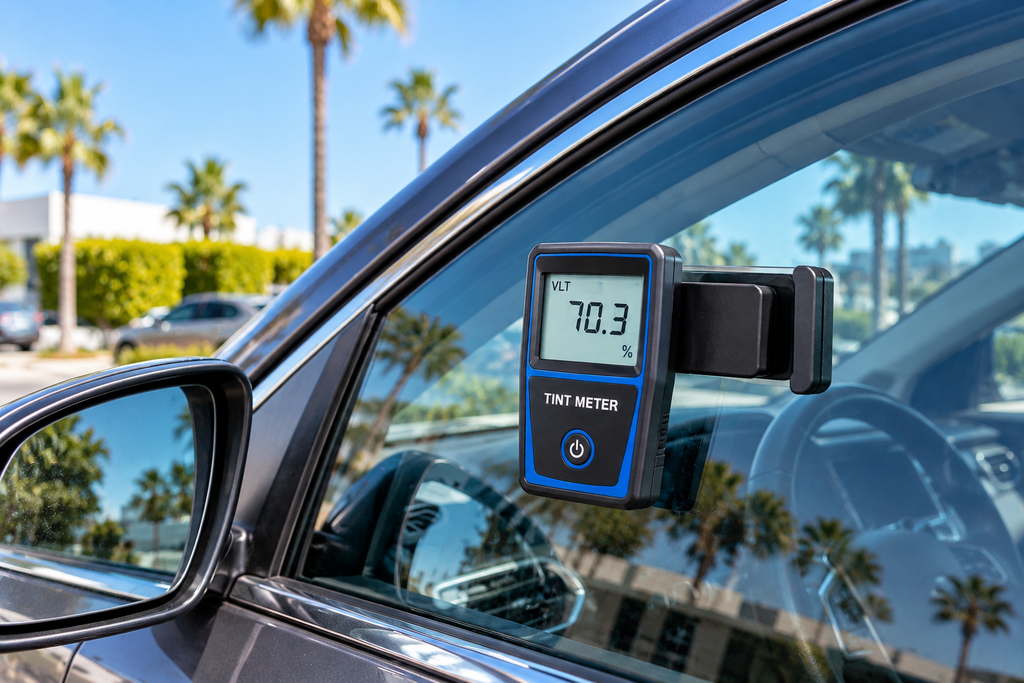
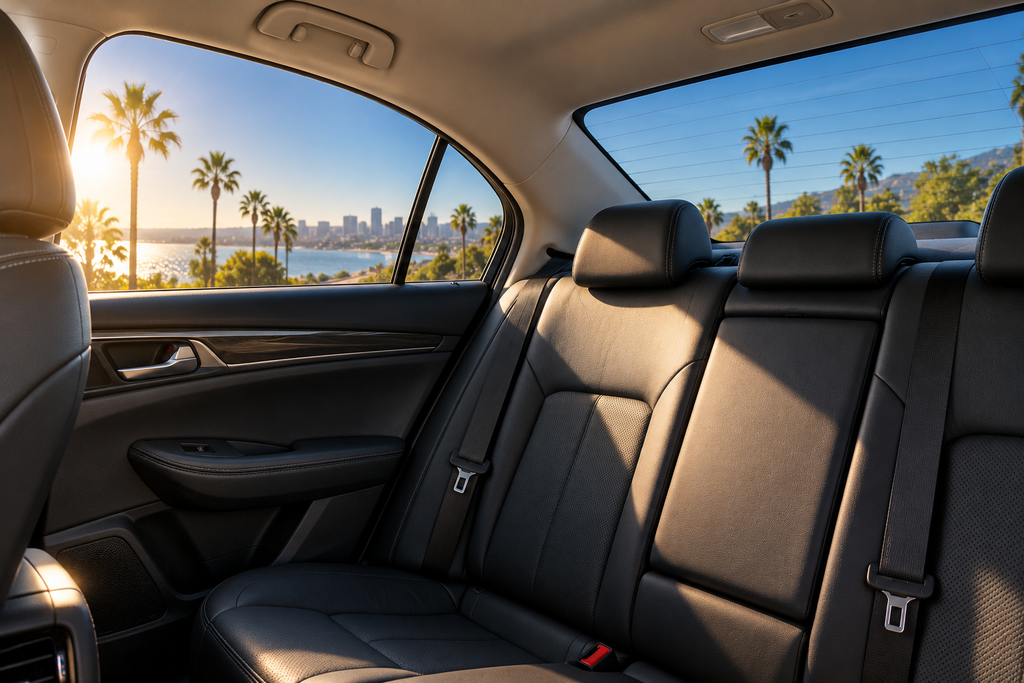
For California drivers, the practical approach is to keep the front side windows within the 70 percent combined limit and put your darker, higher-performing film on the rear. Around 35 percent on the rear windows gives a refined look with easy visibility, 20 percent adds noticeable privacy, and 5 percent, often called limo tint, offers maximum privacy but makes reversing at night harder.
| Situation | Recommendation |
|---|---|
| Daily commuter in a sunny area | Ceramic film with 35 percent on the rear for comfort and visibility |
| Family car or rideshare | 20 percent ceramic on the rear for passenger privacy and cooler back seats |
| Frequent night driving | 35 percent or lighter on the rear, putting heat rejection ahead of darkness |
| Maximum privacy | 5 percent on the rear windows, which California allows with dual side mirrors |
| Panoramic glass roof | A nearly clear ceramic such as Air Ceramic, which is designed for large roof glass |
| Medical light sensitivity | Clear film on the front side windows and windshield with a physician’s letter |
If you are unsure, choose the lighter shade in a better film. Going darker later is easy, but a shade that feels too dark at night is an expensive mistake to undo.
How Much Does Car Window Tint Cost?
Professional car window tint usually costs a few hundred dollars, and the film you choose drives the price more than anything else. At Superior Window Solutions, published automotive pricing runs $100 to $400 for standard dyed film, $150 to $500 for Black Ceramic, $200 to $500 for Air Ceramic, and $200 to $800 for Ceramic i3, depending on the vehicle and the windows being tinted.
| Film Line at Superior Window Solutions | Price Range | TSER | Warranty |
|---|---|---|---|
| Black, standard dyed | $100 to $400 | 30% to 43% | Ask for details |
| Black Ceramic | $150 to $500 | 47% to 63% | Lifetime |
| Air Ceramic | $200 to $500 | 44% to 50% | Lifetime |
| Ceramic i3 | $200 to $800 | 56% to 71% | Lifetime |
Vehicle size, the number of windows, steeply curved rear glass, and removing old film can raise or lower a quote. Superior Window Solutions also offers a windshield add-on starting at $189 with a complete window tint purchase. Keep in mind that the cheapest quote isn’t always the best value, since low-grade film that fades or bubbles costs more to remove and replace than better film would have upfront.
Is Ceramic Window Tint Worth the Extra Cost?
Ceramic tint is worth it for most drivers in hot, sunny climates like Southern California. It rejects far more heat than dyed film, holds its color, does not interfere with phones or GPS, and lets you choose a lighter shade without giving up comfort. At Superior Window Solutions, every ceramic film is also backed by a lifetime warranty.
Dyed film still makes sense in some cases. If you are tinting an older vehicle on a tight budget, or you mainly want privacy and glare reduction on the rear windows, a quality dyed film is a reasonable choice. For a car you drive every day in strong sun, the comfort gain from ceramic is noticeable from the first hot afternoon.
Why Does Professional Installation Matter?
Even the best window tint performs poorly when it is installed badly. Professional installers work in a clean environment, cut film precisely to each window, heat-shrink it to fit curved rear glass, and measure light transmission to keep you within legal limits. Poor installs lead to bubbles, peeling edges, and trapped dust, and illegal shades can bring a citation and forced removal.
Use this checklist when choosing a tint shop:
- Published film lines with real performance specs
- A written warranty covering bubbling, peeling, fading and adhesive failure
- A separate warranty on the installation itself
- Clear guidance on your state’s tint laws for each window
- Consistent recent reviews that mention clean work and good communication
Superior Window Solutions publishes TSER and infrared figures for its automotive films, replaces film that bubbles, peels, fades, cracks, changes color, delaminates, or loses adhesion, and adds a one-year limited installation warranty.
Why Choose Superior Window Solutions for Car Window Tint?
Superior Window Solutions is a San Diego window tinting company that handles residential, commercial, and automotive work across San Diego County. Virgil Ryan owns and operates the business and has worked in the window tinting industry since 1998.
Car owners can choose an affordable dyed film, Black Ceramic for strong everyday heat rejection, the multilayer Ceramic i3 for top performance, or the nearly clear Air Ceramic for windshields and roof glass. Each line has published pricing and performance figures, so you can compare options before requesting a quote.
Reviews on Yelp and Google frequently mention fast responses, easy scheduling, reasonable pricing, and careful installers. One longtime customer described the company replacing the film on both front windows when an edge came loose years after installation. The current Black Ceramic package covers the sides and rear of common sedans for $350, and promotions change throughout the year, so check superiorwindowsolutions.com for the latest offers.
Frequently Asked Questions
How long does car window tint last?
A quality film installed by a professional can last many years, often well over a decade for premium products. Ceramic films hold their color and performance longer than dyed films, which can fade over time. Superior Window Solutions backs its ceramic automotive films with a lifetime warranty that covers problems like bubbling, peeling, or fading.
Does ceramic window tint interfere with phone or GPS signals?
No. Ceramic film is nonmetallic, so it does not block cell phone, GPS, radio, or keyless entry signals. Signal problems are associated with metallic films, which use metal particles to reflect heat. If your car relies on connected features or you navigate by phone, ceramic film gives you strong heat rejection without affecting reception.
Can you put tint over factory privacy glass?
Yes. Many SUVs and trucks come with darkened rear glass from the factory, but that glass is designed mainly for privacy and typically does little to stop heat. Adding a ceramic film over it improves heat rejection. The film and glass darkness combine, so the result looks darker than either one alone.
Is 35 percent tint legal in California?
It depends on the window. A 35 percent tint is legal on the rear side windows and back window in California, provided the car has dual side mirrors. It is not legal on the front side windows, which must transmit at least 70 percent of visible light when the factory glass and film are measured together.
How long does it take to tint a car?
Most full-vehicle tint jobs are completed the same day, though timing varies by vehicle size, the number of windows, and whether old film needs to be removed first. Afterward, keep the windows rolled up for a few days while the film cures, and expect any slight haziness to clear as it dries.
Ready to Find the Right Window Tint for Your Car?
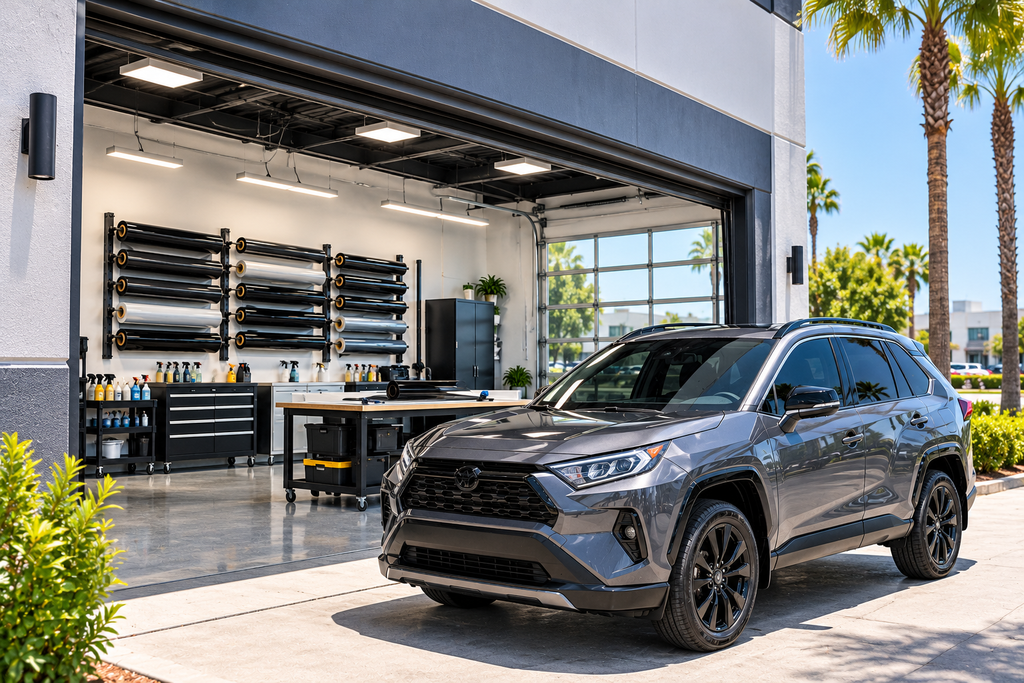
Choosing the best window tint for your car comes down to three things: a film that rejects real heat, shades that keep you legal, and an installer who stands behind the work. Superior Window Solutions brings all three together for drivers across San Diego County, with dyed and ceramic options, published performance data, and a lifetime warranty on every ceramic film. The Black Ceramic package for common sedans is $350, and the team will help you pick the right shade for each window. Call 877-484-6886 or visit superiorwindowsolutions.com to see current promotions and schedule your free estimate.