
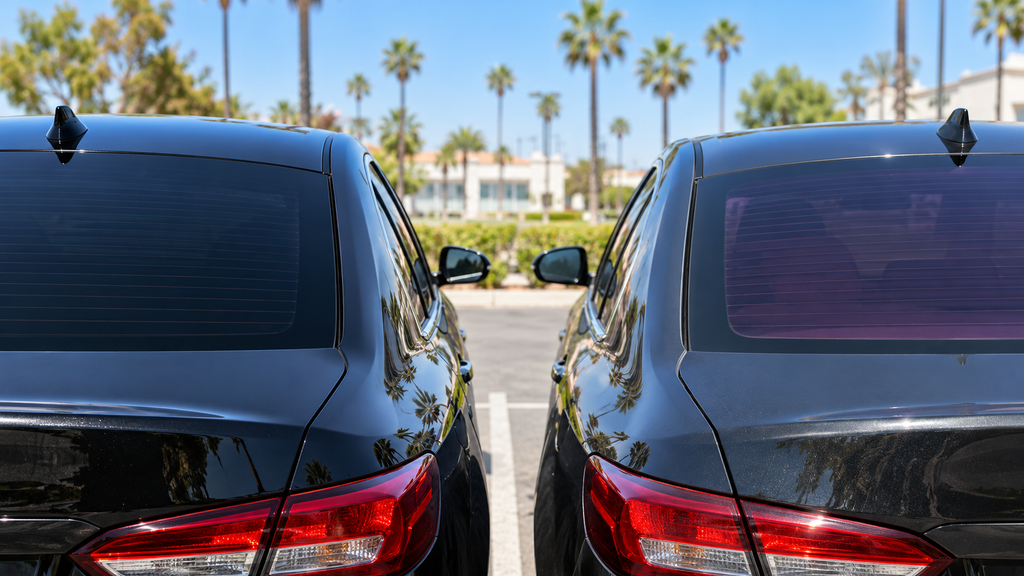
Yes, for most drivers, ceramic car window tint is the better choice. Both films block more than 99% of UV rays, but ceramic tint rejects far more infrared heat, holds its color for years, and keeps you cooler without going extra dark. Dyed tint costs less and handles glare and privacy well, but it absorbs heat instead of rejecting it and tends to fade over time.
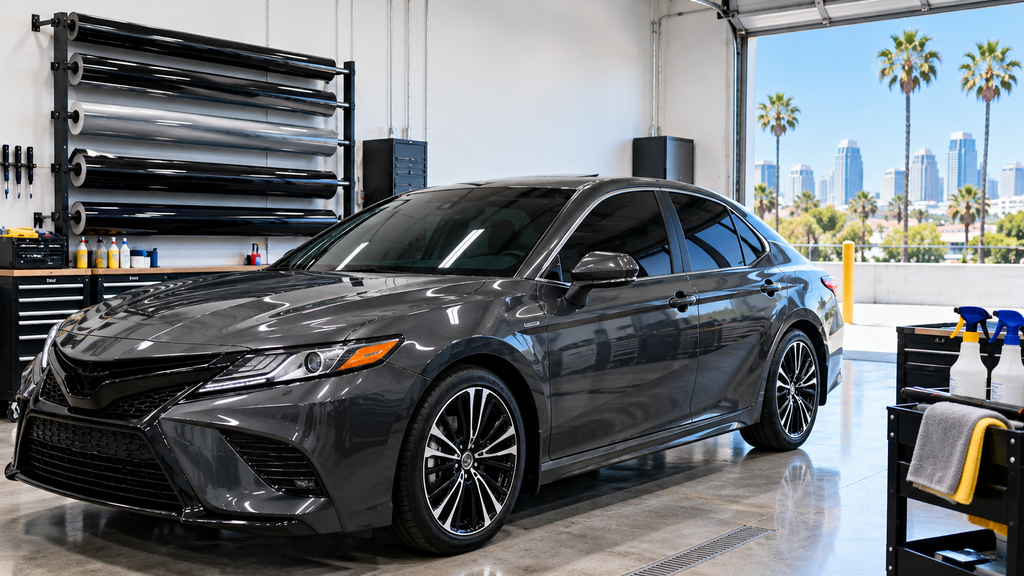
Superior Window Solutions installs both dyed and ceramic car window tint at its shop on Silverton Avenue in San Diego, so this comparison reflects the exact films local drivers choose between. The current automotive special is the Black Ceramic Package at $350 for side and rear windows on common sedans, and every ceramic film the company installs carries a lifetime warranty. To compare the two options for your vehicle, request a free estimate.
Quick Takeaways
- Ceramic tint blocks heat with microscopic ceramic particles, while dyed tint relies on a dye layer that absorbs sunlight.
- Both film types block more than 99% of UV rays, so the real difference is heat rejection, clarity, and lifespan.
- At Superior Window Solutions, standard dyed film rejects 30% to 43% of total solar energy, while its ceramic films reach as high as 71%.
- Dyed film is known to fade and turn purple after years of sun exposure. Quality ceramic film is far more color-stable.
- In California, law restricts how dark your front side windows can be, which makes heat rejection at a lighter shade especially valuable.
- Superior Window Solutions offers a Black Ceramic Package for common sedans for $350, backed by a lifetime warranty.
What Is the Difference Between Ceramic and Dyed Window Tint?
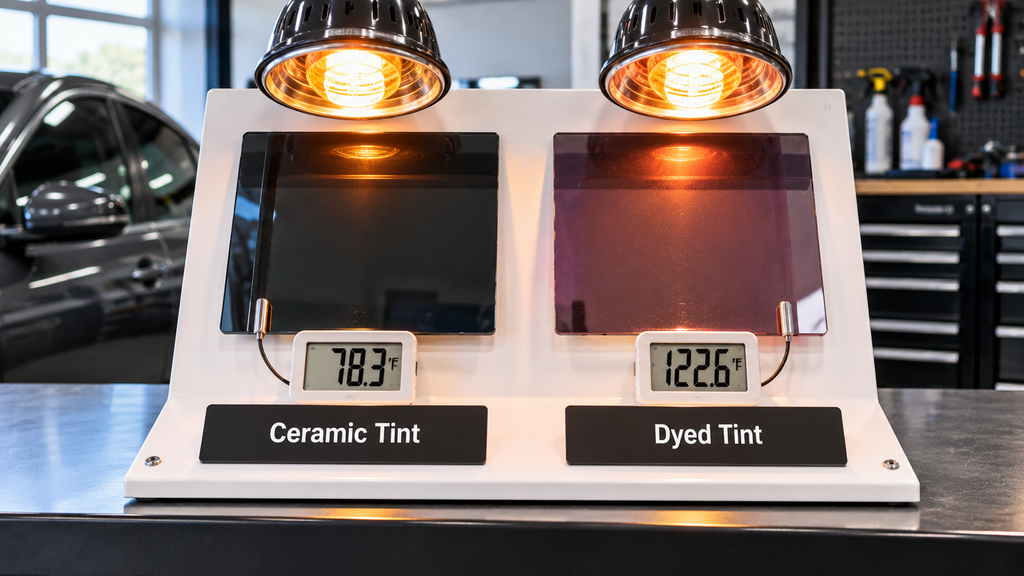
The main difference is how each film handles heat. Dyed window tint uses a layer of dye that absorbs visible light and some solar energy, then releases that heat back toward the glass and cabin. Ceramic window tint uses non-metallic ceramic particles that block infrared light, the part of sunlight you feel as heat, without needing a dark shade to do it.
Because dyed tint works mostly by darkening the glass, its heat performance depends on how dark you go. A lighter dyed film does very little for cabin temperature. Ceramic film breaks that link so that a medium shade can feel noticeably cooler than a much darker dyed film.
Ceramic tint also contains no metal. That matters because metallic films can interfere with phone reception, GPS, and keyless entry. Ceramic avoids that problem entirely, which is why it has become the standard premium choice for modern vehicles packed with electronics.
How Much More Heat Does Ceramic Tint Block?
Ceramic tint blocks substantially more heat than dyed tint. Based on published specifications from Superior Window Solutions, standard dyed film rejects 30% to 43% of total solar energy, depending on shade, while ceramic films reject between 44% and 71%. The top ceramic option also rejects about 93% of infrared heat, which is where the comfort difference really comes from.
Total solar energy rejection, often shortened to TSER, measures how much of the sun’s combined energy a film blocks from entering your car. It is the most useful single number for comparing how cool a film will feel. Here is how the four automotive films offered by Superior Window Solutions compare.
| Film | Type | Total Solar Energy Rejection | UV Blocked | Price Range | Warranty |
|---|---|---|---|---|---|
| Black Standard | Dyed | 30% to 43% | Over 99% | $100 to $400 | Contact for details |
| Black Ceramic | Ceramic | 47% to 63% | 99% | $150 to $500 | Lifetime |
| Ceramic i3 | Multi-layer ceramic | 56% to 71%, with 93% infrared rejection | Over 99% | $200 to $800 | Lifetime |
| Air Ceramic | Clear ceramic | 44% to 50% at 70% to 78% light transmission | Over 99% | $200 to $500 | Lifetime |
Independent manufacturer data points in the same direction. Madico, a window film maker, reports that its dyed automotive film rejects roughly 26% of infrared energy compared with 93% for its ceramic film, a gap of about three and a half times.
In practice, that means a car parked in a sunny San Diego lot will heat up more slowly with ceramic film, and the air conditioning will catch up faster once you start driving. Drivers with long commutes or dark interiors notice the difference most.
Do Ceramic and Dyed Tint Both Block UV Rays?
Yes. Quality dyed and ceramic films both block more than 99% of ultraviolet rays, so either one will help protect your skin and slow sun damage to leather, dashboards, and upholstery. UV protection is not the deciding factor between the two. The real difference comes from heat rejection, optical clarity, and how long each film lasts.
Does Dyed Window Tint Fade or Turn Purple?
Dyed window tint can fade and turn purple over time because the dye breaks down under constant sun exposure. Film manufacturers acknowledge this failure pattern, and it is the main reason dyed film developed a reputation for looking cheap after a few summers. Ceramic film uses particles rather than dye, so it holds its color far better.
Not every dyed film fails at the same rate. Better dyed films protect the dye layer with outer layers that slow fading. Still, in a sunny climate like Southern California, dyed film is generally the first type to show its age through purple tones, haze, or bubbling.
This is also where warranty coverage comes in. Superior Window Solutions backs all of its ceramic films with a lifetime warranty and states that it will replace film affected by bubbling, peeling, fading, cracking, color change, or adhesive failure. A long warranty on color stability reflects how confident the industry is in ceramic compared with dye.
Is Ceramic Tint Legal in California?
Ceramic tint is legal in California as long as it meets the state’s darkness and reflectivity rules. California law cares about how much light passes through the glass, not what the film is made of. Under Vehicle Code 26708, the front side windows must let at least 70% of visible light through, while rear side windows and the back window can be any darkness.
Front Side Windows
The front driver and passenger windows are the most restricted. The film, combined with the factory glass, must still allow at least 70% of light through, and it cannot be more reflective than standard glass. Because these windows must stay so light, a dark dyed film is not an option, and a light dyed film adds little heat protection. A clear ceramic film is the practical way to add heat rejection here, so ask your installer to confirm the combined light reading meets the legal limit.
Rear Side Windows and Back Glass
California has no darkness limit for rear side windows or back glass, though a tinted back window requires dual side mirrors. This is where most drivers choose a darker ceramic shade for privacy and maximum heat rejection.
Windshield
California allows a non-reflective tint strip along the top of the windshield, typically the top four inches. Medical exemptions for darker front tint are available for qualifying conditions with documentation from a licensed physician.
How Much Does Ceramic Tint Cost Compared to Dyed Tint?
Ceramic tint usually costs somewhat more than dyed tint, but the gap is smaller than many drivers expect. At Superior Window Solutions, standard dyed film ranges from $100 to $400 depending on the vehicle, number of windows, and coverage, while Black Ceramic ranges from $150 to $500. The premium Ceramic i3 film ranges from $200 to $800.
The more useful way to judge cost is over the life of the car. Dyed film that fades after a few years may need to be removed and replaced, meaning you pay for labor twice. A ceramic film with a lifetime warranty is typically a one-time purchase. For a sedan, the Black Ceramic Package at $350 covering the sides and rear puts ceramic performance within reach of most budgets, and a windshield add-on starts at $189 with the purchase of a complete tint.
When Does Dyed Tint Still Make Sense?
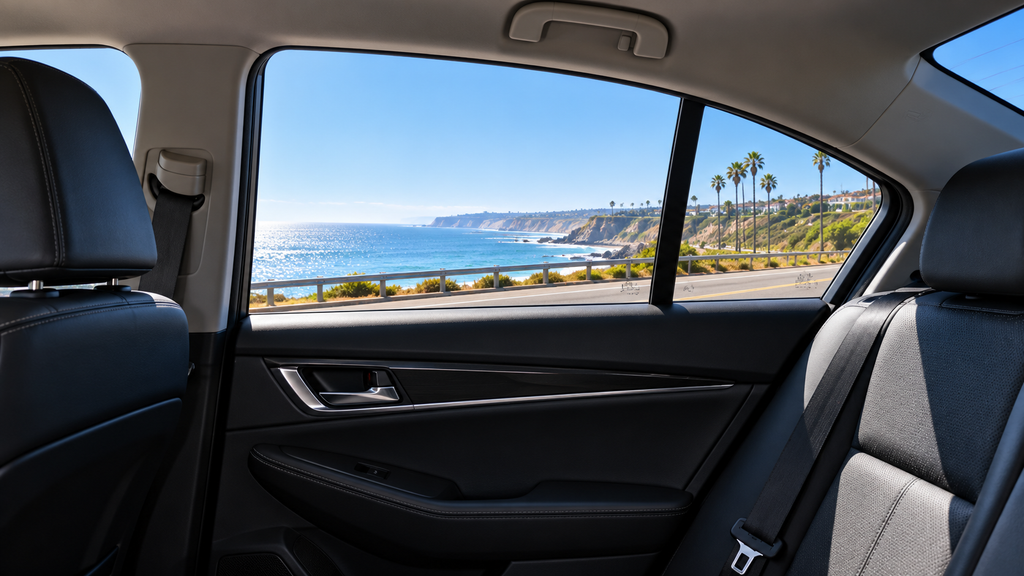
Dyed tint still makes sense when your main goals are privacy, glare reduction, and a lower upfront price, and heat is not a big concern. It suits a vehicle you plan to sell soon, a second car that mostly stays in a garage, or a tight budget where some UV and glare protection beats none.
| Your Situation | Better Choice | Why |
|---|---|---|
| Daily commuter in a sunny area | Ceramic | Higher heat rejection makes every drive more comfortable |
| Dark leather or a black interior | Ceramic | Reduces the heat that builds up in dark surfaces |
| You keep cars for many years | Ceramic | Color stability and a lifetime warranty avoid replacement costs |
| Lots of in-car tech and keyless entry | Ceramic | Non-metallic film will not interfere with signals |
| Lowest possible upfront cost | Dyed | Still blocks UV and cuts glare for less money |
| Selling the car within a year or two | Dyed | Long-term durability matters less |
| Want heat control on legal front windows | Clear ceramic | Adds heat rejection without noticeable darkness |
For most San Diego drivers who spend real time on the freeway, ceramic is the better long-term value. Dyed film is a reasonable budget pick, not a bad product, as long as you understand its limits.
Why Choose Superior Window Solutions for Ceramic Car Window Tint?
Superior Window Solutions is a San Diego window film company that installs automotive, residential, and commercial tint and serves cities throughout San Diego County. Virgil Ryan owns and operates the company and has worked in the window tinting industry since 1998; Yelp and Google reviews often mention his quick responses and clean, courteous crews.
For car owners, the company offers four automotive films, so you can compare dyed and ceramic options side by side instead of being steered toward one product. The lineup includes Black Ceramic, the multi-layer Ceramic i3 for maximum heat rejection, and the nearly clear Air Ceramic for drivers who want heat protection without a dark look. Every ceramic film includes a lifetime warranty, and the company also provides a one-year limited installation warranty.
Right now, the Black Ceramic Package covers the sides and rear of common sedans for $350. Estimates are free.
Frequently Asked Questions
Is ceramic tint worth the extra money?
For most drivers, yes. Ceramic tint keeps a car noticeably cooler, holds its color without turning purple, and often comes with a lifetime warranty. The price difference over dyed film is usually modest, and because ceramic rarely needs replacement, it often costs less over the years you own the car.
Does ceramic tint make windows darker?
Not necessarily. Ceramic tint comes in many shades, from nearly clear to very dark. Because it blocks heat with ceramic particles rather than darkness, a lighter ceramic shade can outperform a darker dyed film. A 35% ceramic film may look fairly dark from outside while still allowing clear visibility from inside during daylight.
Can you see clearly at night with ceramic tint?
Ceramic tint generally offers excellent night clarity, especially at legal shades. Visibility depends mostly on how dark the film is, not the material. If you drive often at night, choose a moderate shade on the rear windows and keep the front side windows within California’s legal light limit.
How long does ceramic window tint last?
Quality ceramic window tint can last well over a decade with normal care, which is why many manufacturers and installers back it with lifetime warranties. Dyed film typically shows its age sooner through fading or a purple tint, particularly on cars that sit in direct sun every day.
Will ceramic tint interfere with my phone or GPS?
No. Ceramic tint is non-metallic, so it does not block cell, GPS, Bluetooth, radio, or keyless entry signals. Signal interference is mainly a concern with metallic films. This makes ceramic a safe choice for newer vehicles with built-in navigation and connected features.
Can old dyed tint be replaced with ceramic?
Yes. A professional installer removes the old dyed film and adhesive, cleans the glass, and applies the new ceramic film. Removing faded or bubbling tint is common, and switching to ceramic then makes it far less likely you’ll face the same problem again.
Ready to Upgrade to Ceramic Car Window Tint in San Diego?
If you want a cooler cabin, lasting color, and protection that will not fade into purple, ceramic car window tint is the upgrade worth making. Superior Window Solutions installs Black Ceramic, Ceramic i3, and Air Ceramic films, all backed by a lifetime warranty, and can walk you through legal shade choices for every window on your vehicle. Ask about the Black Ceramic Package at $350 for common sedans, or call 877-484-6886 to schedule. You can also visit the shop at 7960 Silverton Ave #122, San Diego, CA 92126.