

Car theft is rarely random. In Southern California, especially in dense metro areas like San Diego, criminals often rely on speed, opportunity, and risk assessment. A vehicle parked on a busy street or in an open lot is evaluated within seconds. Visibility into the cabin, ease of entry, lighting, and the likelihood of being noticed all factor into that decision.
Most thieves want to minimize uncertainty. If they can quickly scan the interior and confirm that valuables are present, the risk feels calculated. If they cannot see inside at all, the decision becomes more complicated. This is where window tint plays a nuanced role. It can either slow down a criminal’s assessment or, in some cases, raise suspicion depending on the environment and vehicle type.
Understanding this mindset is essential before assuming that darker glass automatically equals better protection.
How Window Tint Changes Visibility and Perceived Risk
Tinted glass limits visibility from outside a vehicle. From a security standpoint, this reduced visibility can work in your favor by concealing bags, electronics, or aftermarket upgrades that might otherwise attract attention. In many break-ins, the crime occurs because something valuable is clearly visible.
However, limited visibility can also create uncertainty. A thief may wonder whether a car contains high-value items or advanced security features. In well-lit urban areas like downtown San Diego, this uncertainty can increase perceived risk, especially when foot traffic is high.
That said, visibility cuts both ways. In isolated or poorly lit areas, dark glass may make it harder for passersby to notice suspicious behavior inside the vehicle. This is why the surrounding environment matters just as much as the tint itself.
Situations Where Tint Can Discourage Theft
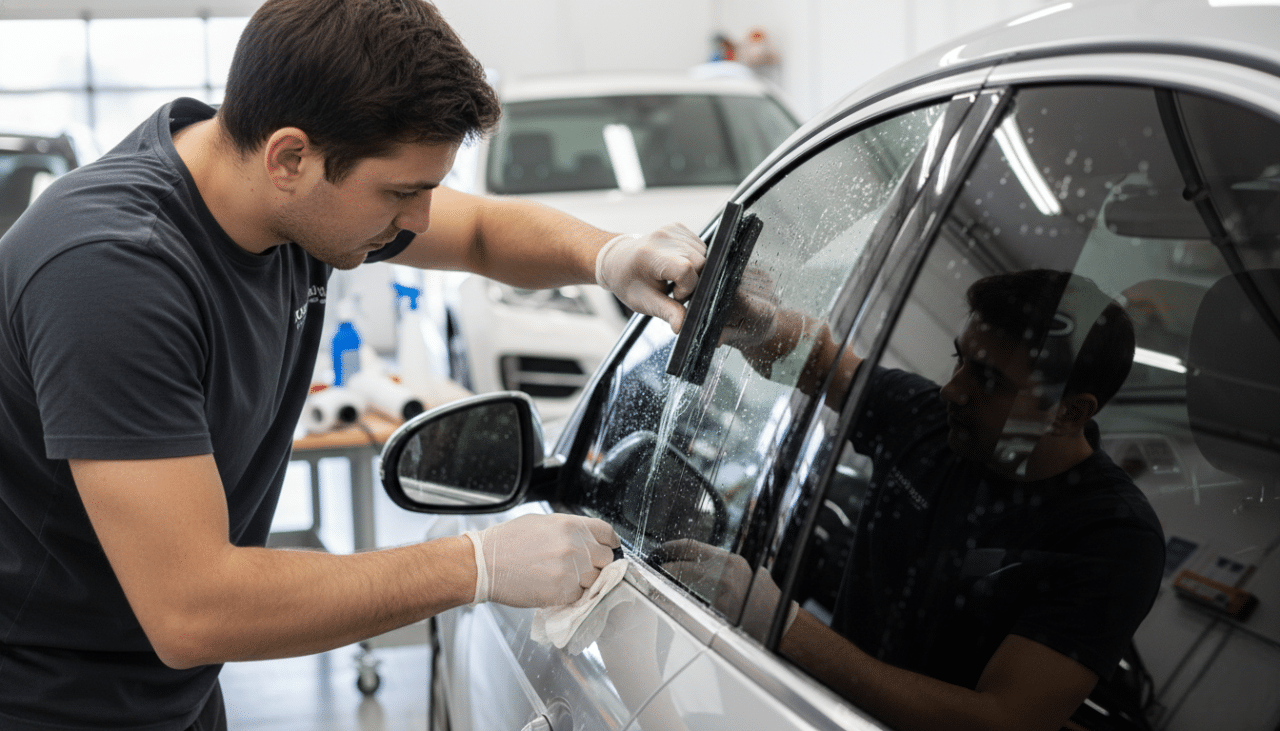
In many real-world scenarios, professionally installed window film can act as a passive deterrent. When combined with alarms, immobilizers, or steering wheel locks, tint adds another layer of deterrence for criminals seeking quick, low-effort targets.
Busy commercial areas, beach parking lots, and residential neighborhoods with consistent activity tend to favor reduced visibility. Thieves often avoid cars that require extra effort or increase the chance of drawing attention. A vehicle that does not immediately reveal its contents may simply be skipped in favor of an easier option.
Additionally, high-quality security film can make glass more resistant to shattering. While it does not make windows unbreakable, it can slow entry enough to trigger alarms or attract attention, which is often enough to stop the attempt entirely.
When Tinted Glass Might Raise Red Flags
Despite the benefits, there are circumstances in which darkened windows can attract unwanted attention. In areas with strict tint enforcement or neighborhoods where heavily modified vehicles stand out, a darker appearance may signal customization or valuable upgrades.
Some thieves associate privacy glass with higher-end interiors, audio systems, or aftermarket accessories. In quiet residential streets or overnight parking situations, this perception can work against the owner if no other security measures are in place.
Another factor is legality. California has specific regulations governing front window light transmission. Vehicles that appear non-compliant may attract attention not only from law enforcement but also from criminals who assume the owner is less concerned with regulations overall.
The Role of Local Environment in San Diego and Southern California
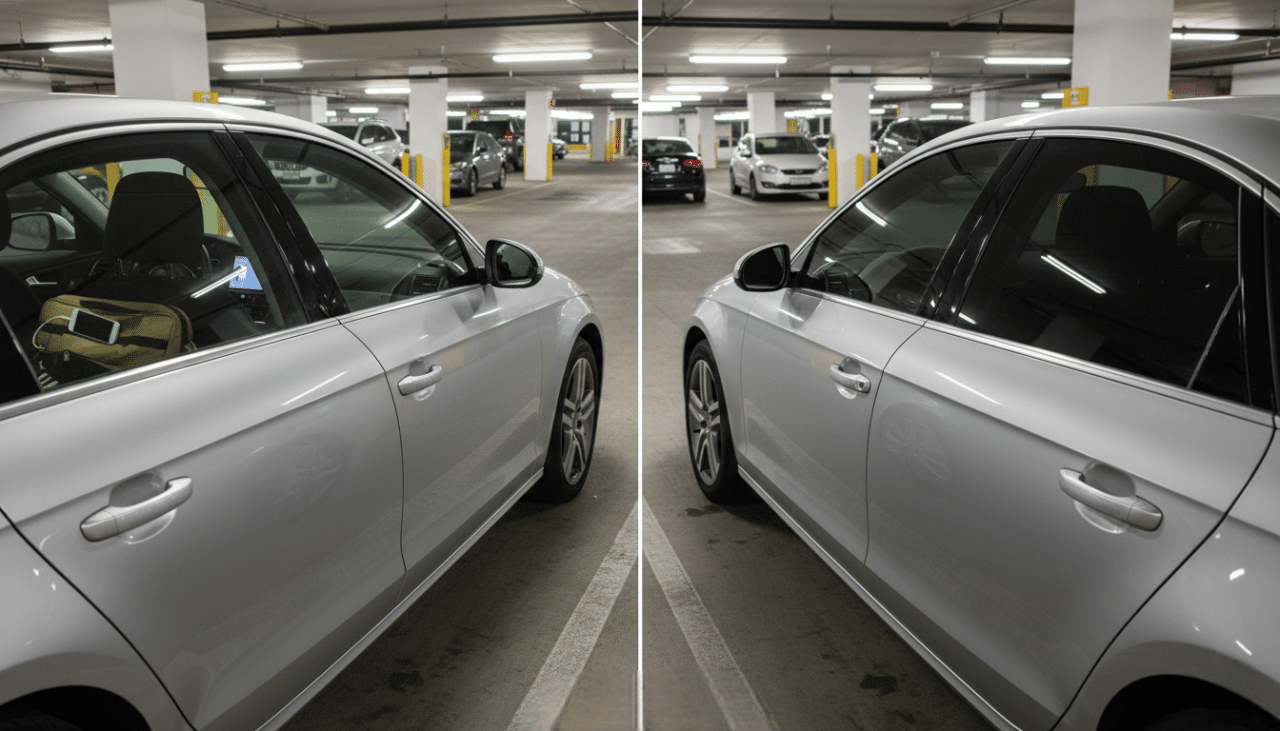
Southern California presents a unique mix of urban density, beach communities, and suburban neighborhoods. Parking conditions vary dramatically across downtown San Diego, coastal areas such as La Jolla, and inland communities.
In high-traffic zones, reduced interior visibility often works in favor of law enforcement because criminals are under constant observation. In quieter areas, especially overnight, layered security becomes more important. Tint alone should never be relied on as the sole deterrent.
Climate also plays a role. Many drivers install window film primarily for heat reduction and UV protection. When done professionally, this added comfort need not compromise security. In fact, lighter ceramic films can offer thermal benefits without creating an overly dark appearance.
Choosing the right shade and material for your driving and parking habits is more effective than defaulting to the darkest option.
Smart Ways to Combine Tint With Other Security Measures
Window tint works best as part of a broader vehicle security strategy. Alarms, GPS tracking, steering wheel locks, and smart parking options all help reduce the risk of theft. Tint enhances these systems by limiting what potential criminals can see and how quickly they can act.
Professional installation is critical. Poorly applied film can bubble, peel, or look uneven, which may signal neglect or amateur modification. Clean, legal installations look intentional and well-maintained, reducing unwanted attention.
For Southern California drivers, selecting film that meets California regulations while offering heat rejection and moderate privacy strikes the best balance. The goal is not to hide the vehicle, but to make it less appealing than the one parked next to it.
When visibility is reduced just enough to create uncertainty—without standing out—window tint becomes a subtle yet effective component of your overall security strategy.