

Residential tinted windows reduce glare by limiting how much intense visible light passes through the glass. Window film absorbs, reflects, or diffuses some incoming sunlight, softening the bright hot spots that wash out TV screens and make you squint before the light reaches the room. Quality films do this while still letting natural daylight through, so you keep your view without closing the blinds.
Superior Window Solutions has installed home window tinting in San Diego since 1998, and glare control is one of the main reasons homeowners call. The company offers both standard and ceramic residential films and says on its residential page that ceramic film is much more effective at preventing glare than regular tint. Consultations and quotes are free, and the team confirms you are happy with the tint strength during the installation visit.
Quick Takeaways
- Glare comes from concentrated visible light, so a film’s visible light transmission rating matters most for glare control.
- Lighter films keep rooms bright and still soften glare, while darker films cut more glare along with more daylight.
- Ceramic and spectrally selective films reduce glare and heat without the mirrored look of traditional reflective tint.
- Quality residential films also block up to 99 percent of UV rays, which slows fading of floors and furniture.
- The right tint varies by room, so a home office and a west-facing living room rarely need the same film.
- Superior Window Solutions offers free consultations for residential glare control across San Diego County.
What Causes Window Glare in a Home?
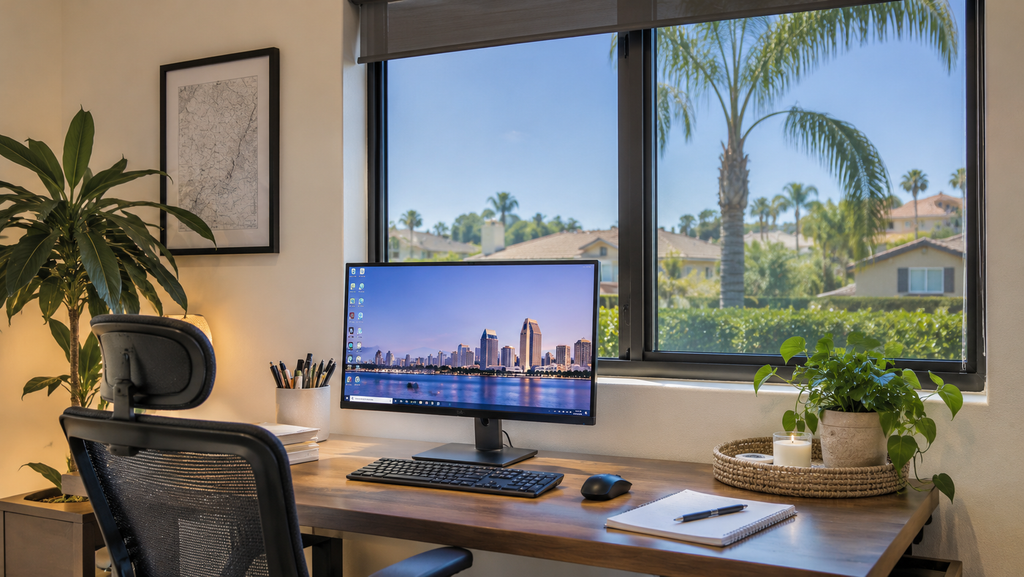
Window glare happens when sunlight entering a room is much brighter than everything around it. Direct sun through clear glass, light bouncing off water or pavement, and low afternoon sun hitting a screen all create glare. Your eyes struggle with that contrast, which leads to squinting, eye strain, and screens that are hard to read.
Lighting researchers separate glare into two kinds. Discomfort glare is the irritating brightness that makes you want to look away or close the blinds. Disability glare is stronger and actually reduces what you can see, like a television picture that disappears under a patch of afternoon sun.
Clear residential glass lets most visible light straight through. That is great for daylight but leaves no buffer when the sun sits low on the horizon. In San Diego, west-facing rooms take the brunt of late afternoon sun, and coastal homes deal with extra brightness reflected off the ocean. Light-colored floors, glossy countertops, and large sliding doors make the problem worse by bouncing light around the room.
How Does Window Film Reduce Glare?
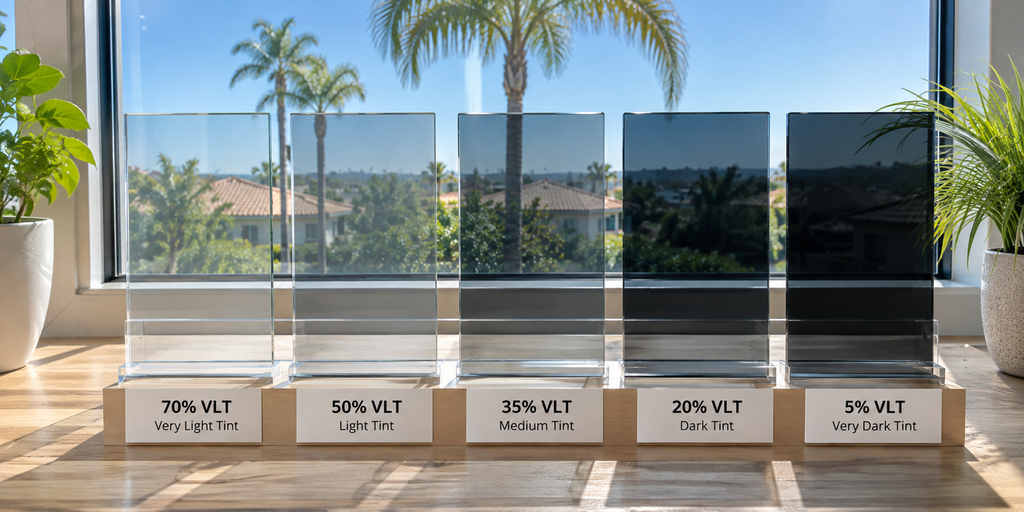
Window film reduces glare by controlling how much visible light passes through the glass. Every film has a visible light transmission rating, usually shortened to VLT. A film rated at 35 percent VLT lets 35 percent of visible light through and blocks the other 65 percent. The lower the VLT, the more glare the film removes, although the room also gets dimmer.
Films tame brightness in three main ways.
Absorbing Light
Dyed and ceramic films absorb some visible light and solar energy that strikes the glass. The light that does come through is less intense, and the window’s appearance from the street changes only slightly.
Reflecting Light
Metalized and reflective films bounce some sunlight back outside before it enters the room. They are very effective against glare and heat, but they give the glass a mirrored look and can reflect your own room back at you after dark.
Diffusing Light
Frosted and decorative films scatter incoming light so it spreads evenly instead of landing in one harsh spot. This softens glare and adds privacy, though it blurs the view through the glass.
Manufacturer specifications show how quickly glare drops as VLT falls. On one architectural film spec sheet, a film that passes about 70 percent of visible light cuts glare by roughly 20 percent, while a film near 50 percent VLT on dual pane glass cuts glare by about 40 percent. Even a modest step in shade makes a noticeable difference.
Will Tinted Windows Make My Home Too Dark?
Tinted windows do not have to make your home dark. Most residential solar films come in visible light ratings from about 15 to 70 percent, and lighter films above roughly 40 percent can look close to untreated glass from inside. A light ceramic or spectrally selective film reduces glare while keeping rooms bright and open.
The most common misunderstanding is that glare control requires dark glass. For many homes, the goal is simply to soften the brightest hours, not block the sun. Superior Window Solutions makes the same point on its residential page, noting that a very light tint may be all you need when the main concern is glare on a computer screen.
Keep nighttime behavior in mind, too. Reflective films provide daytime privacy because outdoors is brighter than indoors. After sunset, with your lights on, that effect reverses, so people outside can see in more easily and your own view out becomes harder. If a room needs privacy around the clock, pair the film with shades or choose a frosted film for that window.
Which Type of Window Film Is Best for Reducing Glare?
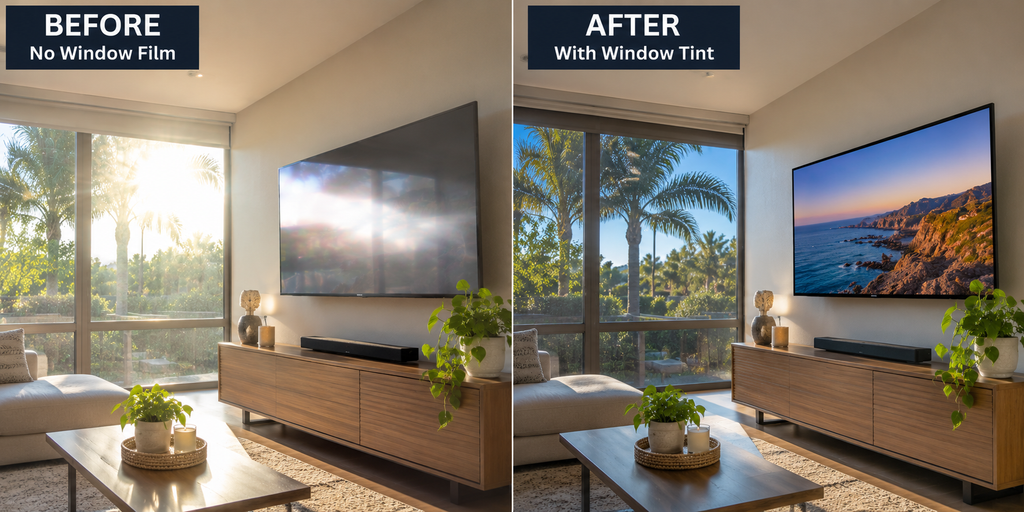
For most homes, ceramic or spectrally selective film offers the best balance for glare reduction because it softens harsh light and blocks heat without a mirrored look. Reflective film delivers the strongest glare and heat control but changes the look of the glass. Frosted film diffuses glare and adds privacy where a clear view is not needed.
| Film Type | Glare Reduction | Daylight and View | Best For |
|---|---|---|---|
| Light ceramic or spectrally selective | Moderate | Bright rooms, clear view | Living rooms, view windows, homes that want natural light |
| Medium ceramic | Strong | Softer light, clear view | Home offices, TV rooms, west-facing rooms |
| Dyed film | Moderate to strong | Darker tone, may fade over time | Budget projects on less exposed windows |
| Reflective or dual reflective | Very strong | Mirrored exterior, reduced night view | Intense direct sun and daytime privacy |
| Frosted or decorative | Diffuses glare | Light passes, view blurred | Bathrooms, entryways, street-facing windows |
How Much Tint Do You Need for Each Room?
The right tint depends on how a room is used and which direction it faces. Rooms with screens or strong west exposure need the most glare control, while north-facing rooms and spaces where you want maximum daylight usually need only a light film. Matching film room by room keeps the home from feeling too dark in some places and still glaring in others.
| Situation | Recommendation |
|---|---|
| Home office with a monitor near the window | Light to medium ceramic film to stop screen washout without dimming the workspace |
| TV or media room | Medium ceramic film, or darker film if the room is used mostly for viewing |
| West or south-facing living room | Ceramic or spectrally selective film for afternoon glare and heat |
| Ocean or bay view windows | Light ceramic film that softens reflected glare while protecting the view |
| Bedroom or nursery | Medium film paired with blackout shades for sleep |
| Bathroom or street-facing window | Frosted or decorative film for diffused light and privacy |
| Dual pane or low E glass | A film the manufacturer approves for that specific glass |
Do Glare-Reducing Films Also Block Heat and UV Rays?
Yes. Most residential films that reduce glare also cut solar heat and ultraviolet light. Quality window films block up to 99 percent of UV rays, which helps slow fading of hardwood floors, rugs, and upholstery. Heat rejection varies by product, and some premium residential films block up to 78 percent of the sun’s heat that would otherwise come through the glass.
That heat figure appears consistently across the industry. 3M advertises residential films that reduce up to 78 percent of the sun’s heat, and Superior Window Solutions cites the same upper figure for its own tints. A U.S. General Services Administration report on applied window films also notes that typical films can reduce glare while substantially lowering solar heat gain, which can greatly reduce cooling needs.
Film slows fading rather than stopping it completely, because visible light and heat also contribute to sun damage.
Is Window Tint Better Than Blinds or Curtains for Glare?

Window tint is often better than blinds for everyday glare because it works all day without blocking your view. Blinds and curtains stop glare only when they are closed, and closing them also shuts out daylight. Many homeowners use both, letting film handle routine glare and heat while shades stay available for sleep, full privacy, or blackout.
The U.S. Department of Energy reports that 75 percent of residential window coverings stay in the same position every day. In practice, that means many households close the blinds against morning or afternoon glare and simply leave them shut, giving up natural light for hours. Window film removes that tradeoff. Superior Window Solutions notes that tinted film on home office windows can be even more effective than blinds, since it keeps light soft without dimming the room.
Why Choose Superior Window Solutions for Glare Reduction in San Diego?
Superior Window Solutions is a San Diego window tinting company that has served homeowners since 1998. It installs standard and ceramic residential films for glare control, heat reduction, UV protection, privacy, and security, offers free consultations, and serves communities across San Diego County, including La Jolla, Point Loma, and El Cajon.
The company is based at 7960 Silverton Ave, Suite 122, in San Diego’s Miramar area, and it is an ENERGY STAR partner. For homeowners whose main concern is glare, the team recommends ceramic film when stronger glare and heat control matter, and a lighter tint when screen glare is the main issue. During installation, installers double-check that you are satisfied with the tint strength before the job is finished.
Its published warranty coverage includes replacement of film affected by bubbling, peeling, fading, cracking, color change, delamination, or adhesive failure, a one-year limited installation warranty, and help matching existing glass warranties so you keep those protections after tinting. Reviewers on Angi describe the company removing old film from a garden window and replacing it, including a hard-to-reach window more than 15 feet off the ground.
Frequently Asked Questions
Does window tint reduce glare on TV and computer screens?
Yes. Screen glare happens when bright sunlight hits or shines behind a display and overwhelms its brightness. Window film lowers the intensity of that light, so screens stay readable without closing the blinds. A light to medium ceramic film is usually enough for a home office, while a media room used mainly for viewing may benefit from a slightly darker film.
Can you still see outside through glare reduction film?
Yes. Residential glare reduction film is designed to keep your view clear from inside during the day. Light ceramic films are barely noticeable, while darker and reflective films make the outdoors look softer and dimmer. At night, reflective films can make it harder to see out and easier for others to see in when interior lights are on.
How much does it cost to tint home windows for glare?
Cost depends on film type, total glass area, and installation complexity. National 2026 estimates from This Old House range from about $ 5 to $ 45 per square foot, with basic solar film at the lower end and security or specialty films at the higher end. An on-site quote is the most reliable way to price your specific windows.
Does window film help with glare reflected off the ocean?
Yes. Light reflected off water adds a second source of brightness on top of direct sun, which is why coastal and bay-view homes often feel glary even when the sun isn’t shining straight in. A light ceramic film softens that reflected light while keeping the view sharp, so you can enjoy the water without squinting through the afternoon.
Is it safe to tint dual pane windows to reduce glare?
It is safe when the film is approved for your glass. Some darker, heat-absorbing films can cause thermal stress on certain double-pane or low-E windows, which can crack glass or damage seals. Reputable manufacturers publish film to glass compatibility charts, and a professional installer uses them to choose a film that controls glare without putting your windows at risk.
Ready to Cut the Glare in Your San Diego Home?
You do not have to choose between natural light and comfort. Residential tinted windows soften harsh sun, keep screens readable, and protect your floors and furniture from fading, all while preserving the view you bought your home for. Superior Window Solutions has helped San Diego homeowners choose and install glare-reducing window film since 1998, with standard and ceramic options matched to each room. Consultations and quotes are free; the team checks tint strength with you during installation, and the work is backed by film and workmanship warranties.