
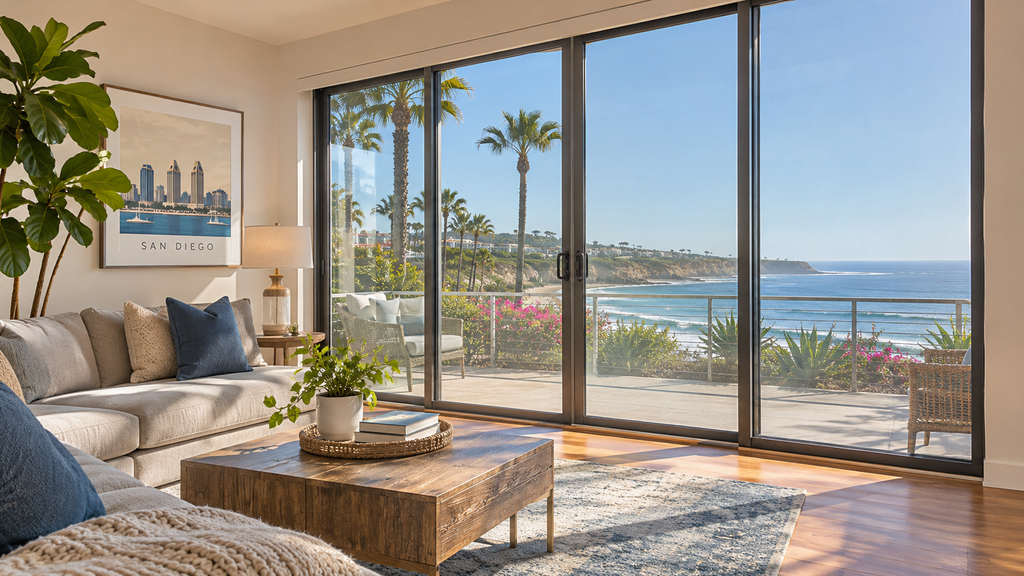
For most existing homes, window film is the better value. It costs a fraction of new glass, goes on in a day, and modern ceramic films block nearly all UV and a large share of solar heat without darkening rooms. Tinted glass makes more sense when you are already replacing windows, because a new factory-glazed unit lasts longer and can improve insulation along with sun control.
Superior Window Solutions is a San Diego window film company that has tinted residential windows since 1998. Its work centers on professional film applied to the glass you already have, rather than glass or window replacement, with standard and ceramic films for heat reduction, UV protection, glare control, privacy, decorative styling, and security. Homeowners deciding between film and new tinted glass can book a free consultation, where the team reviews each window and recommends the right film before any work begins.
Quick Takeaways
- Tinted glass is colored during manufacturing, while window film is a thin layer applied to existing glass.
- Classic gray and bronze tinted glass cuts light and heat in roughly equal amounts, so rooms get darker without dramatic heat savings.
- Professional window film usually costs far less per window than replacing glass, and quality solar films block up to 99 percent of UV rays.
- Tinted or low-E glass lasts longer and is the smarter choice when windows are failing or already scheduled for replacement.
- Dual-pane and low-E windows need film approved for that glass to avoid thermal stress and warranty issues.
- Superior Window Solutions offers free residential window film consultations across San Diego County.
What Is the Difference Between Tinted Glass and Window Film?
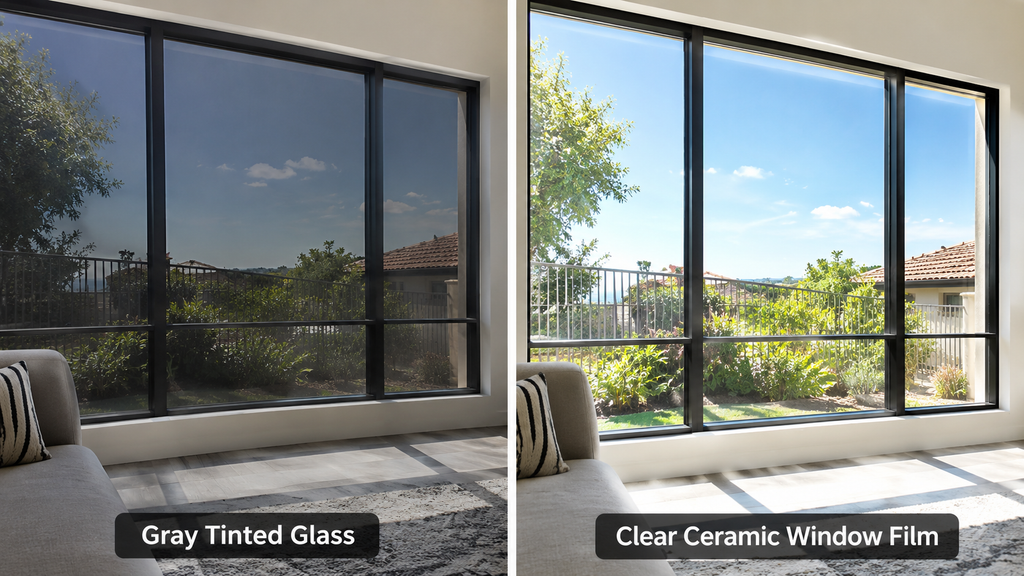
Tinted glass gets its color from additives mixed into the glass during manufacturing, so the tint is permanent and cannot be changed without replacing the pane. Window film is a thin polyester layer, often with ceramic, metal, or dye components, that an installer applies to the inside surface of existing glass. Film can be removed, replaced, or upgraded later.
That difference shapes everything else. Tinted glass comes as part of a new window or glass unit, so a glazier must remove the old glass first. Window film works with the windows you already own, with no demolition or frame work.
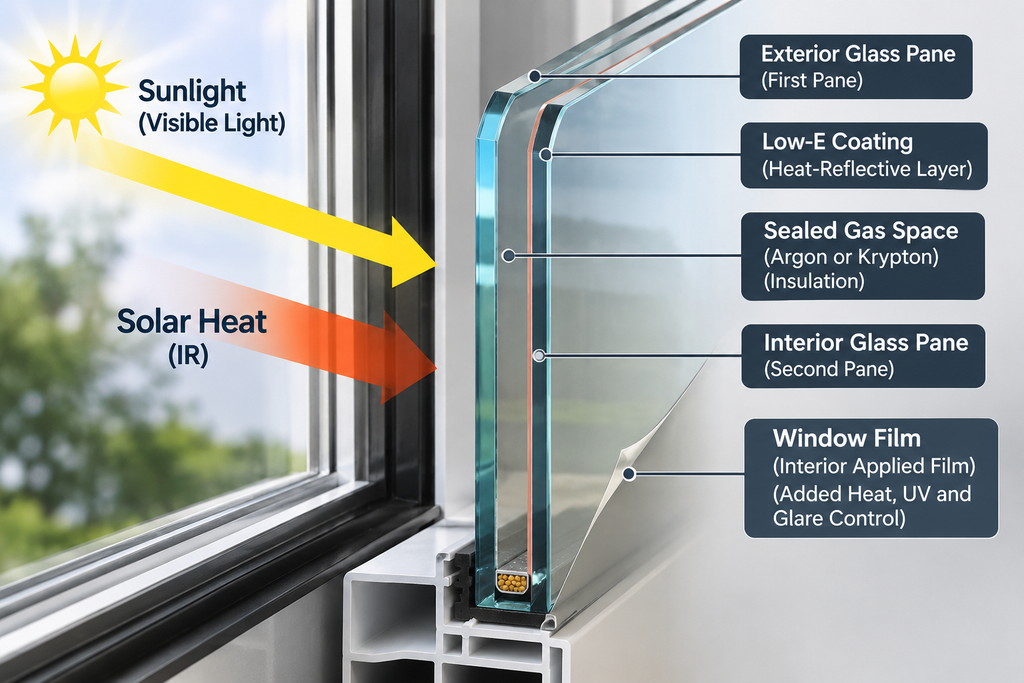
It also helps to separate tinted glass from low E glass. Traditional tinted glass works mainly by absorbing sunlight. Low E glass has a microscopically thin metallic coating that reflects infrared heat while letting most visible light through. Many people say “tinted windows” when they mean either one, so ask any contractor exactly which product they are quoting.
Which Blocks More Heat, Tinted Glass or Window Film?
Neither option wins automatically. Standard gray or bronze tinted glass absorbs sunlight and lowers glare, but according to the U.S. Department of Energy, it reduces light and heat in roughly equal amounts and does not improve a window’s insulating value. Modern spectrally selective films and low-E glass both target invisible infrared heat while keeping rooms bright, making them more efficient choices.
Here is why darkness alone is misleading. Roughly half of the sun’s energy arrives as visible light and much of the rest as near infrared, which you feel as heat. Gray-tinted glass cuts both, so you lose daylight to gain modest heat control. Cardinal Glass Industries notes that gray-tinted glass can cut sunlight by about half yet still offer poor solar heat control, with glass surface temperatures that can climb above 100 degrees Fahrenheit.
Industry data published by Building Design and Construction shows the tradeoff clearly. Traditional reflective tinted glass can reach a low solar heat gain coefficient of about 0.31, but it lets through only about 27 percent of visible light. A high-performance spectrally selective coating can reach a similar 0.27 while transmitting about 64 percent of visible light.
Residential solar films follow the same logic. Depending on darkness and technology, solar control films typically reduce solar heat gain by roughly 30 to 60 percent and block about 99 percent of UV. A light ceramic film can deliver meaningful heat rejection while keeping an ocean view looking natural, which is why many San Diego homeowners prefer it over dark glass.
How Much Does Tinted Glass Cost Compared to Window Film?
Window film is usually much cheaper. Angi estimates professional window film installation at about $ 5 to $ 10 per square foot, while replacing a window’s glass averages around $ 375, and low-E tinted glass can reach about $ 730 per window. Full window replacement, with new frames and installation, typically costs more than glass alone.
| Cost Factor | Window Film | Tinted or Low-E Glass |
|---|---|---|
| Typical price basis | Per square foot of glass | Per glass unit or per window |
| National estimate | About 5 to 10 dollars per square foot installed | About 375 dollars average for glass replacement, up to about 730 dollars per window for low-E tinted glass |
| Installation time | Often one day for a typical home | Depends on ordering, fabrication and glazing schedules |
| Disruption | Minimal, interior work only | Glass or window removal, possible trim and frame work |
| Upgrade later | Film can be removed and replaced | Requires new glass |
Costs vary with glass size, access, and product. Large picture windows, second-story glass, and specialty films such as security or decorative products cost more. Broader 2026 estimates from This Old House place home window tinting at roughly $ 5 to $ 45 per square foot, with basic solar film at the low end and specialty films at the high end. An on-site quote is the only way to get an accurate number for a specific house.
How Long Does Window Film Last Compared to Tinted Glass?
Tinted glass lasts longer. Angi estimates that tinted glass can last around 30 years with proper care, while window film usually lasts about 5 to 10 years and sometimes up to 20. Lifespan depends heavily on film quality, sun exposure, and installation, so professionally installed, name-brand film with a strong warranty tends to sit at the upper end of that range.
The gap is real, but it is not the whole story. Because film costs so much less up front, a homeowner can often replace film once or twice for less than the price of new glass. Film can also be swapped for a newer, better-performing product as technology improves, something you cannot do with tint that is built into the pane. When comparing film quotes, ask how long the product and labor warranties last and what they cover.
Can You Put Window Film on Dual Pane or Low E Windows?
Yes, in most cases, but the film must be approved for that type of glass. Window film absorbs some solar energy and warms the glass, and on dual pane, low E, or thick tinted glass, a poorly matched film can cause thermal stress cracks or seal failure. Reputable film manufacturers publish film-to-glass charts showing which products are safe for each window type.
This matters for homes that already have tinted glass. The International Window Film Association advises against solar film on tinted annealed glass thicker than a quarter inch, because tinted glass already absorbs extra heat. Adding a high absorption film can push that glass past its limits.
Warranties are the other concern. Some window manufacturers limit or void glass and seal coverage when aftermarket film is applied. Many film manufacturers offer glass breakage or seal failure coverage for approved film and glass combinations, usually when a professional installs the film. Read your window paperwork before you tint, and ask your installer which film is approved for your specific glass.
Which Option Should You Choose for Your Home?
Choose window film when your windows are in good condition, and you want to control heat, glare, UV fading, or privacy without replacing glass. Choose tinted or low-E glass when windows are already failing, drafty, or fogged between panes, or when you are building or remodeling and new windows are already in the budget.
| Situation | Better Choice | Why |
|---|---|---|
| Windows are sound but rooms overheat in the afternoon | Window film | Ceramic or spectrally selective film adds heat control at a fraction of glass cost |
| Seals are failing, panes are fogged or frames are rotting | New low E or tinted glass | Film cannot fix condensation, drafts or broken seals |
| New construction or a planned remodel | Low E or tinted glass | Ordering performance glass from the start avoids paying twice |
| Hardwood floors, rugs or artwork are fading | Window film | Quality films block up to 99 percent of UV at low cost |
| You want privacy but may change it later | Window film | Frosted, decorative and reflective films can be removed or updated |
| Ground floor glass and sliding doors | Security window film | Film helps hold broken glass together without replacing it |
| Rental home or a short ownership horizon | Window film | Lower upfront cost and quick installation |
| You plan to stay for decades and want the longest life | New performance glass | Factory glass typically outlasts film |
A common mistake is treating the two as competitors when they solve different problems. Film improves how existing glass handles the sun. New windows improve the whole window system, including insulation, airtightness, and seals. If your windows are only a few years old and working well, replacing them just to add tint rarely pays off.
Is Window Film Worth It for San Diego Homes?
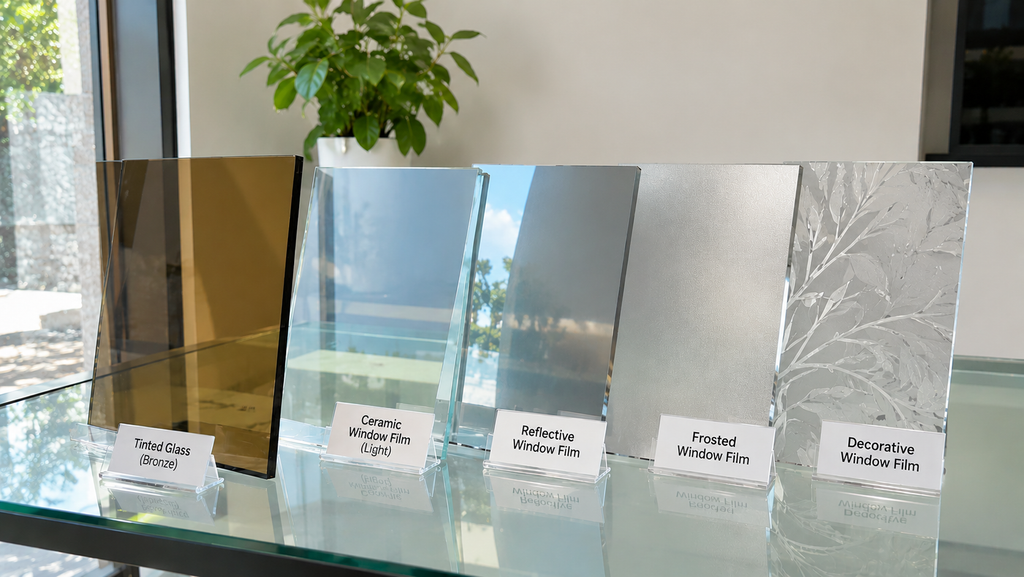
For many San Diego homes, yes. Year-round sun, large view windows, and coastal glare make heat, UV, and glare control valuable, while most homes in the region have windows in good enough condition that replacing glass is hard to justify. Film delivers most of the comfort benefit people want from tinted glass at a much lower cost.
West- and south-facing rooms gain the most, especially living areas with large sliders or picture windows. Inland communities such as El Cajon see hotter afternoons, so stronger heat rejection pays off there. Coastal homes in La Jolla or Point Loma often care more about glare, fading, and keeping the view clear, which favors lighter ceramic films over any dark tint.
Why Choose Superior Window Solutions for Window Film in San Diego?
Superior Window Solutions has installed residential window film in San Diego since 1998. It offers films for heat reduction, UV protection, glare control, privacy, decorative styling, anti-graffiti protection, and security, along with free consultations so each window gets the right film and tint strength instead of a one-size-fits-all product.
The company is located at 7960 Silverton Ave, Suite 122, in San Diego’s Miramar area, and serves communities throughout San Diego County, including La Jolla, Point Loma, and El Cajon. It is an ENERGY STAR partner and installs both standard and ceramic films, with ceramic recommended when stronger heat and glare reduction are the goal.
Its published warranty addresses the two biggest concerns homeowners raise when comparing film with tinted glass. The company says it will replace film affected by bubbling, peeling, fading, cracking, color change, delamination, or adhesive failure; backs its installation work with a one-year limited warranty; and can match existing glass warranties so homeowners keep that protection after tinting.
Reviewers on Angi describe the team removing old, worn film and replacing it with new film, including on hard-to-reach windows, which shows one of film’s practical advantages over tinted glass: when it ages, it can be renewed without touching the window itself.
Frequently Asked Questions
Is window film as good as tinted glass?
Quality window film can match or beat basic gray or bronze tinted glass for heat rejection and UV protection, especially ceramic and spectrally selective films. Factory low-E glass in a new dual-pane window still offers better insulation and a longer lifespan. For sun control on existing windows, film performs very well for the price.
Can you remove window film from house windows?
Yes. Professionally installed window film can be removed, usually without damaging the glass, and replaced with a new or different film. This makes film a flexible choice if your privacy needs change, you want a lighter or darker shade later, or an older film has started to fade or peel.
Does tinted glass make a house darker?
Traditional gray and bronze tinted glass does darken rooms because it reduces visible light along with heat. Blue- and green-tinted glass, along with modern low-E coatings, lets in more daylight. Light ceramic window films can also reject heat while keeping rooms bright, which suits homes where daylight and views matter.
Will window film void my window warranty?
It can. Some window manufacturers limit coverage if aftermarket film is applied, especially film not approved for that glass. Many film manufacturers offset this with glass breakage and seal coverage when an approved product is professionally installed. Check your window warranty first and ask your installer about glass warranty matching.
Can you add window film over existing tinted glass?
Sometimes. Because tinted glass already absorbs extra solar heat, adding film increases the risk of thermal stress, especially on thick annealed glass. An installer should check the glass type and thickness and choose a film approved for tinted glass on the manufacturer’s chart, often a low absorption product.
Get the Benefits of Tinted Windows Without Replacing Your Glass
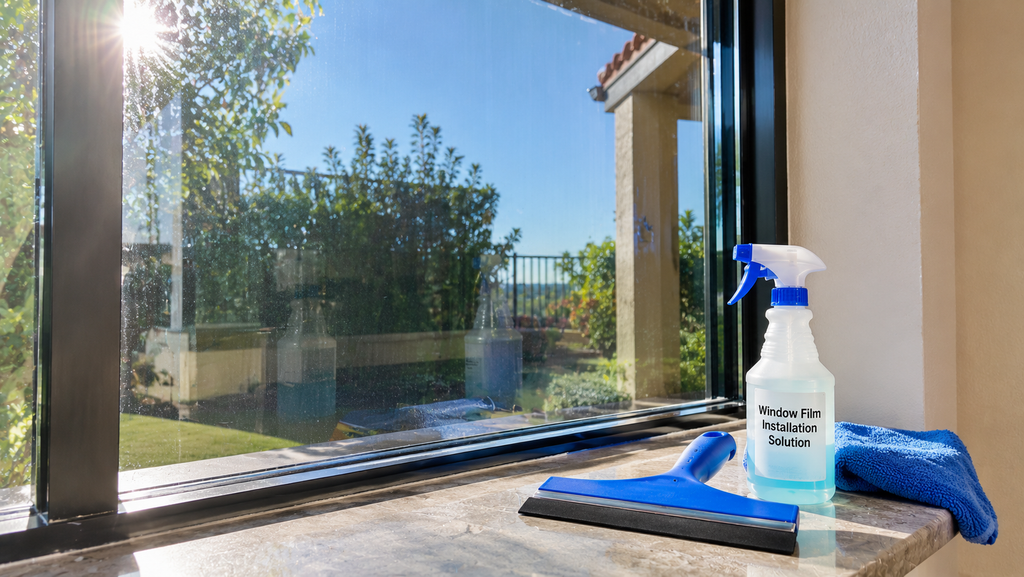
If your windows are in good shape, you likely don’t need new tinted glass to get a cooler, brighter, better-protected home. Superior Window Solutions has helped San Diego homeowners choose and install residential window film since 1998, matching ceramic, solar, privacy, decorative, and security films to each room’s glass. Consultations and quotes are free, tint strength is reviewed during the home visit, and installations are backed by film and workmanship warranties.