
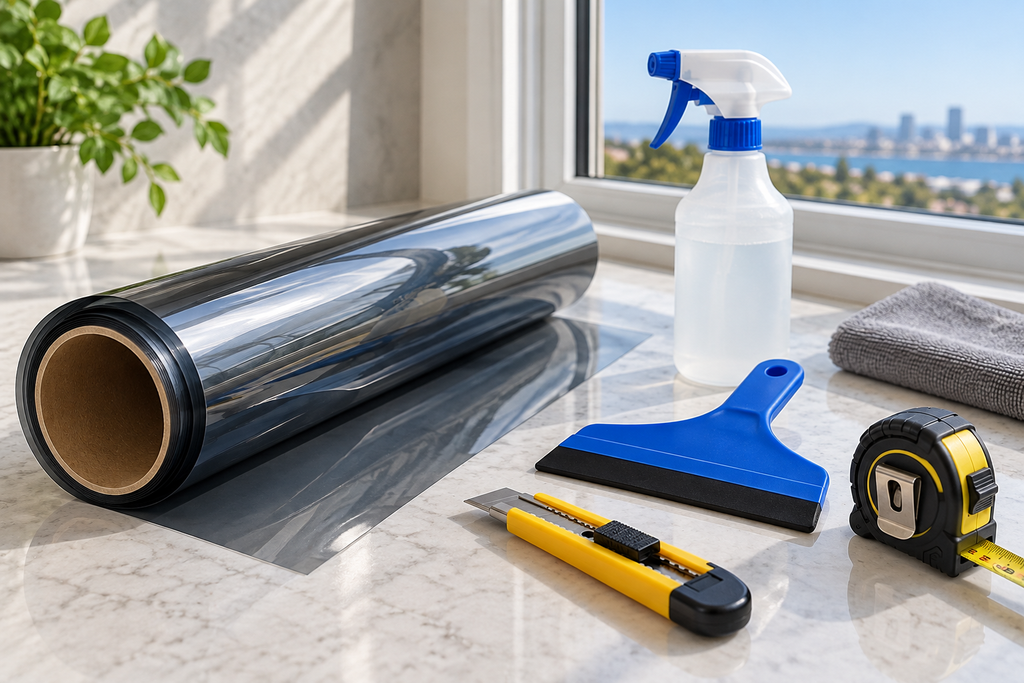
Home Depot sells adhesive window films for as little as $10–$40 per roll, making it the cheapest way to tint a window, but professional installation — typically $5–$10 per square foot including labor — delivers better heat rejection, a warranty that actually holds up, and a bubble-free finish. DIY film suits small, low-stakes projects; whole-home tinting is usually better left to a licensed installer.
How This Relates to Superior Window Solutions
Superior Window Solutions installs residential, commercial, and automotive window film across San Diego, which puts the company on the “professional installation” side of this comparison. The site currently offers a free ceramic film upgrade, a free skylight heat evaluation, and a free estimate on residential and commercial projects. Homeowners weighing a Home Depot roll against a professional quote can get that estimate before deciding which route fits their budget and windows.
Quick Takeaways
- Home Depot’s own online film listings run from roughly $10 to $40 for most residential rolls, with specialty and larger-format films priced higher.
- Professional home window tinting averages around $600 per project nationally, with a typical range of $316–$942, or about $5–$10 per square foot in labor alone.
- DIY film can be installed with basic tools (spray bottle, squeegee, utility knife) but is unforgiving of measurement or cleaning mistakes.
- Installing film yourself can void a window manufacturer’s warranty in some cases, while professional installers typically back their work with their own product and labor warranty.
- Professionally installed ceramic and solar films are commonly rated to block up to 99% of UV rays and cut a large share of incoming solar heat.
- Superior Window Solutions currently advertises residential tinting with a free ceramic upgrade and free estimate as part of its ongoing promotion.
What Is Home Depot Window Tinting Film?
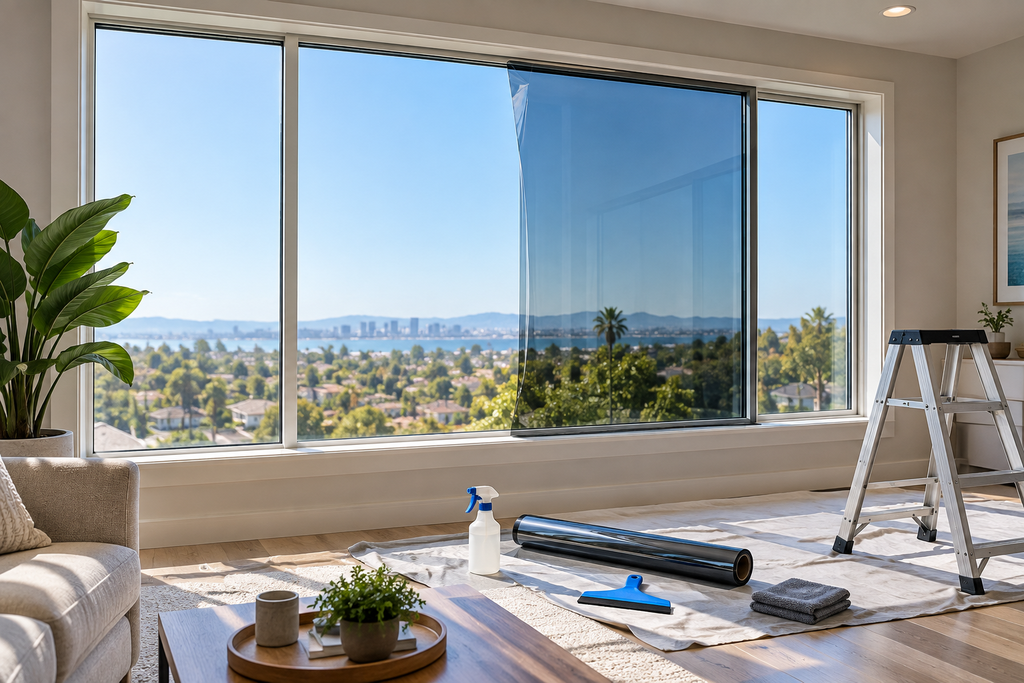
Home Depot window film is retail adhesive film sold by brands like Gila, Smart Tint, and d-c-fix, designed for homeowners to cut and apply themselves. It comes in tinted, frosted, decorative, privacy, and heat-blocking varieties, sold by the roll in standard widths.
Most of these films are static-cling or self-adhesive sheets meant for do-it-yourself application with household tools. They’re marketed primarily for glare reduction, privacy, and light decorative effects rather than the deeper heat-rejection performance of professional-grade architectural films. Pricing on Home Depot’s site for residential window film generally clusters in the $10–$40 range per roll, with fewer specialty or oversized products priced significantly higher.
How Does Professional Window Film Installation Differ?
Professional installation uses commercial-grade film, precise measuring and cutting equipment, and trained technicians who prep the glass and squeegee out air before the film cures. The film itself is often a higher-performance ceramic or solar product not typically sold in DIY retail rolls.
Installers measure each pane individually, clean the glass to remove all residue, and apply film edge-to-edge with minimal visible seams— something much harder to achieve with a utility knife and a roll of retail film cut by hand. Because the installer stands behind the work, most professional jobs include a materials-and-labor warranty that a self-installed roll typically does not.
How Much Does Each Option Cost?
Home Depot film costs less upfront—often under $40 per roll—but professional installation, averaging around $600 per home nationally, includes labor, the right film selection, and warranty coverage that DIY pricing doesn’t reflect. The better comparison isn’t sticker price; it’s total cost including redos, wasted material, and any damage.
DIY Cost Range
Home Depot’s residential film listings mostly fall between $10 and $40 per roll, with a handful of larger or specialty products priced from around $100 up to $250–$300. One roll can often cover an average-sized home window, but larger windows, multiple panes, or mistakes that require a second roll add up quickly.
Professional Cost Range
National data puts average professional home window tinting at about $612 per project, with most homeowners paying between $316 and $942, and labor alone commonly running $5 to $10 per square foot. Superior Window Solutions lists residential and commercial tinting starting at $295–$325, depending on the promotion in effect at the time of the quote.
What Are the Pros and Cons of DIY Home Depot Window Film?
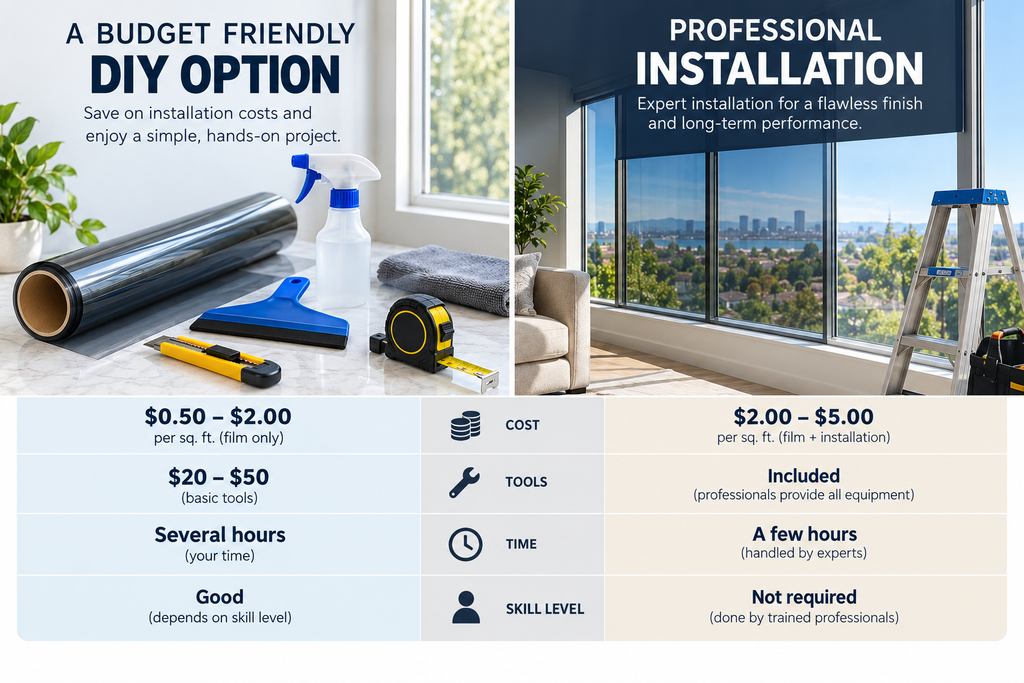
DIY film is cheap, requires minimal tools, and can be installed the same day you buy it, but it’s easy to trap bubbles, misjudge the right film for your glass type, and end up with results that look noticeably less clean than professional work.
Pros:
- Lower material cost per square foot than hiring a pro
- No appointment needed — buy it and install it the same day
- Good option for small, low-visibility windows, temporary rentals, or one-off privacy needs
Cons:
- Application mistakes (dust, bubbles, misaligned cuts) are difficult to fix once film is applied
- Not every film is compatible with every type of glass; using the wrong film can put thermal stress on the pane
- DIY installation can affect window manufacturer warranties in some cases
- Large or multiple windows require ladders, precise cutting, and significant time investment
What Are the Pros and Cons of Professional Window Tinting?
Professional installation costs more upfront but generally delivers a cleaner finish, access to higher-performance film, and warranty protection—the trade-off is scheduling an appointment and paying for labor, not just materials.
Pros:
- Technicians measure and cut each pane for a precise, bubble-free fit
- Access to ceramic and solar films rated for higher heat and UV rejection than most retail DIY rolls
- Warranty coverage on materials and labor from the installer
- No wasted material from measuring or cutting errors
Cons:
- Higher upfront cost than a DIY roll
- Requires scheduling an appointment rather than same-day purchase and install
- Quality varies by installer, so checking reviews and licensing still matters
Is DIY Window Film Ever the Better Choice?
DIY film makes sense for small, low-stakes jobs — a single bathroom window, a rental you don’t plan to stay in long-term, or a purely decorative accent — where a less-than-perfect finish is an acceptable trade-off for the lower cost. It’s a weaker choice for whole-home energy efficiency projects, large or high-visibility windows, or any glass still under a manufacturer warranty.
| Situation | Recommendation |
|---|---|
| Single small or low-visibility window | Home Depot DIY film is a reasonable option |
| Rental property, short-term stay | DIY film for privacy/decorative needs |
| Whole-home energy efficiency goals | Professional installation |
| Large windows, sliders, or skylights | Professional installation |
| Windows still under manufacturer warranty | Professional installation (confirm warranty terms first) |
| Want a warranty on the finished work | Professional installation |
How Long Does Each Option Last?
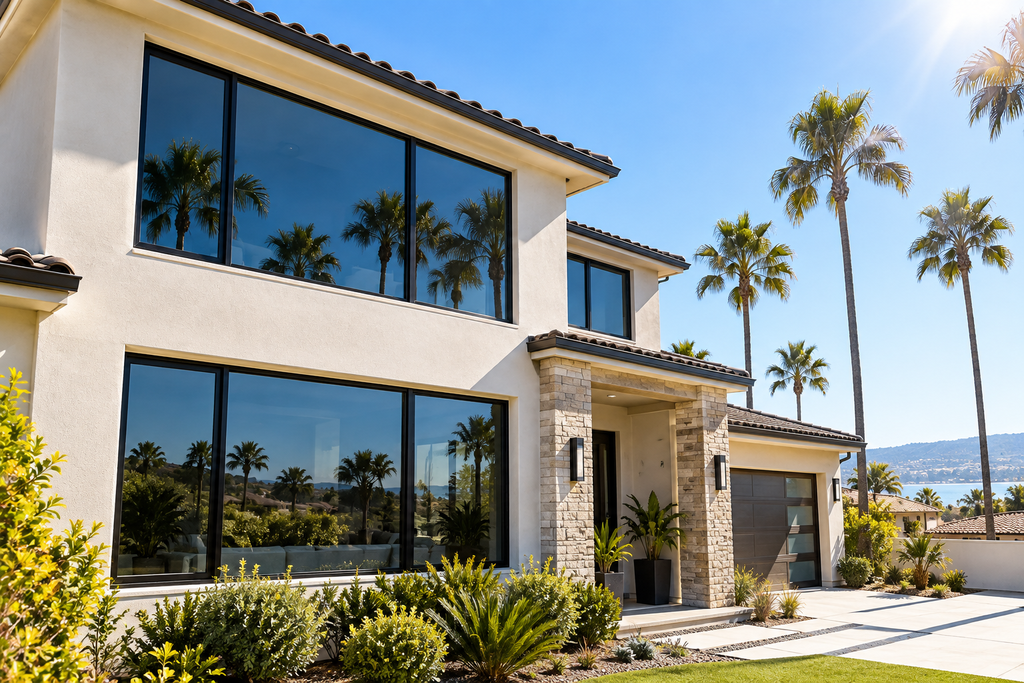
Retail DIY films generally have a shorter usable life than professional-grade films and are more prone to peeling, bubbling, or fading if not applied correctly, while professionally installed ceramic and solar films are designed to last many years under normal conditions. The actual lifespan of either option depends heavily on sun exposure, glass type, and how well the film was applied.
Because film failure (peeling, discoloration, bubbling) often depends as much on application quality as on the film itself, a professionally installed job is more likely to reach its full expected lifespan without needing an early redo.
What Should You Ask Before Choosing an Installer?
Before booking a professional installer, ask what film brand and warranty they use, whether the warranty covers labor as well as materials, and whether they’ve worked on your specific window or glass type. A reputable installer should answer all of these clearly and provide a written estimate.
It’s also worth asking whether the quoted price is per window, per square foot, or a flat project rate, since pricing structures vary between companies and can make quotes hard to compare directly without clarification.
Why Choose Superior Window Solutions for Home Window Tinting?
Superior Window Solutions provides residential, commercial, and automotive window tinting across San Diego and nearby communities including El Cajon, La Jolla, and Point Loma, with a stated focus on ceramic and solar films for heat reduction, UV protection, and privacy. The company’s current promotion includes a free ceramic film upgrade, a free skylight heat evaluation, and a free estimate for residential and commercial projects.
For homeowners who’ve weighed the DIY route and decided the finish, warranty, and heat performance of professional installation are worth the extra cost, getting a free estimate is a low-risk way to compare an actual quote against a Home Depot roll before committing either way.
Frequently Asked Questions
Is Home Depot window film any good?
It can work well for basic privacy, glare reduction, or decorative purposes on a budget, but most retail DIY films offer less heat and UV rejection than professional-grade architectural film, and results depend heavily on careful application.
Can I put professional-grade film on myself to save money?
Some professional films are sold only through licensed dealers and are designed for trained application; using them without proper technique can waste material and may not achieve the advertised heat-rejection performance, since much of that performance depends on a bubble-free, edge-to-edge seal.
Will DIY window film void my window warranty?
It can, depending on the window manufacturer — some warranties specifically exclude damage related to aftermarket film application. Check your window warranty terms before applying any film yourself.
How much should I budget for professional window tinting?
Nationally, homeowners pay about $612 for a home tinting project, typically between $316 and $942 depending on window size, number of windows, and film type. Getting a free, itemized estimate is the most reliable way to know your actual cost.
Does window film really lower energy bills?
Solar and ceramic films are commonly reported to reduce a large share of incoming solar heat, which can meaningfully lower cooling costs during hot months, though the exact savings depend on window orientation, climate, and film type.
Ready to Compare Your Options?
If you’re deciding between a Home Depot roll and a professional installer, the fastest way to make an informed choice is to get an actual quote for your windows. Superior Window Solutions offers a free estimate, a free ceramic film upgrade, and a free skylight heat evaluation for residential and commercial projects in the San Diego area.