
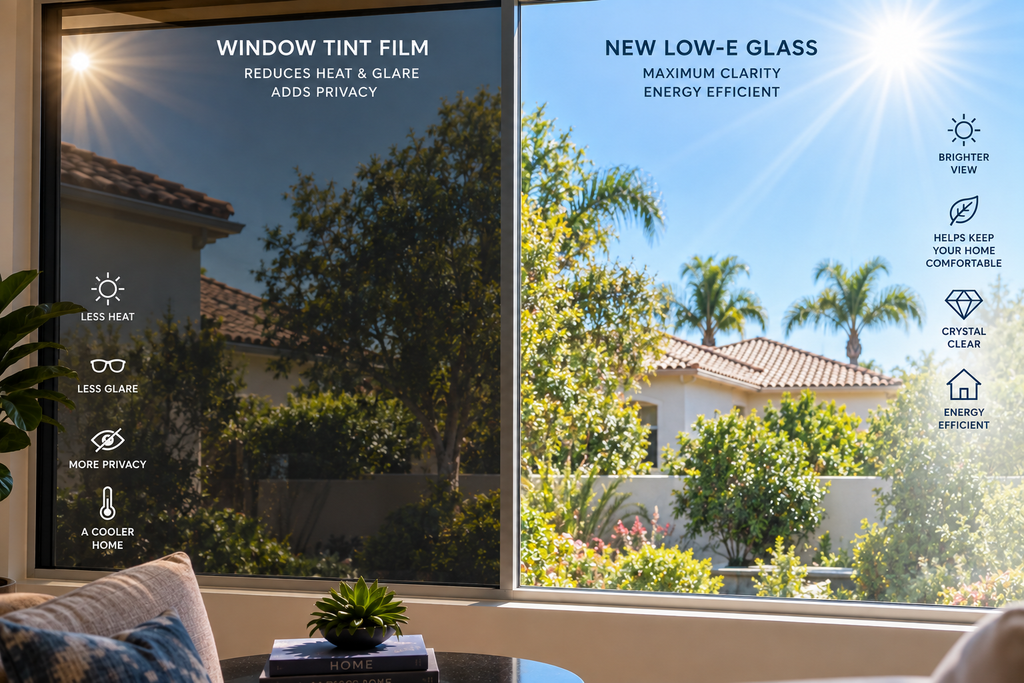
For most homes and businesses with sound, properly sealed windows, professionally installed window film is the faster and lower-cost way to get low-E-level heat and UV control, typically for a fraction of the price of new low-E windows and with a payback measured in a few years rather than a decade or more. Full window replacement only pulls ahead when the existing frames or seals have failed.
How This Relates to Superior Window Solutions
Superior Window Solutions installs professional residential, commercial, and automotive window film across San Diego, with tinting priced from roughly $325 for a standard project according to the company’s own site. The company’s offer is a Summer Promo covering a free ceramic upgrade, a free skylight evaluation, and a free estimate on residential and commercial projects. For homeowners weighing film against a full window swap, a free on-site evaluation is the fastest way to get an apples-to-apples number.
Quick Takeaways
- Low-E glass can cost roughly eight times as much per square foot as window film when comparing a full window replacement to a retrofit film install.
- Window films with a low-emissivity coating can deliver the insulating benefits of modern low-E windows at a much lower installed cost and carbon footprint.
- The U.S. Department of Energy has identified window films as a “first-tier” energy retrofit technology, with paybacks reported in as little as three years.
- Roughly 25–35% of a building’s energy loss is tied to inefficient windows, and around 40% of a typical building’s cooling load comes from solar heat gain through glass.
- Superior Window Solutions currently prices residential and commercial tinting starting around $325, with a Summer Promo offering a free ceramic upgrade and a free estimate.
- Film is a same-day-to-few-hours install with no structural work; full window replacement takes longer and involves removing existing frames.
What’s the Difference Between Window Film and Low-E Glass?
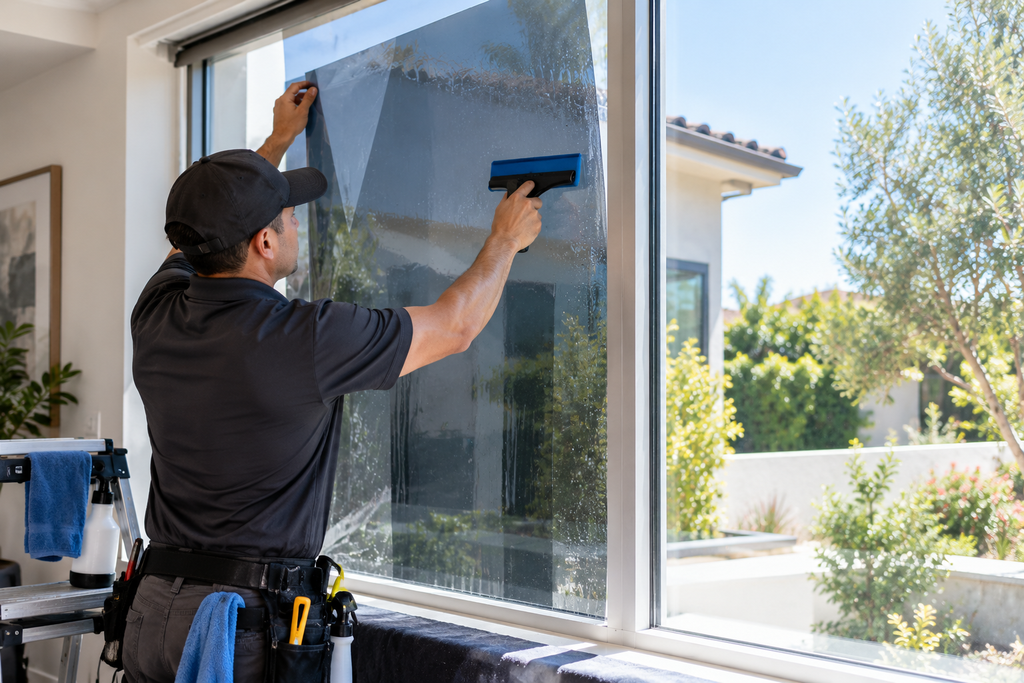
Window film is a thin, adhesive-backed coating applied to the inside of existing glass to reduce heat, glare, and UV transmission, while low-E (“low-emissivity”) glass is manufactured with a microscopically thin metallic coating baked into new replacement window units. Both target the same problem — unwanted solar heat and UV gain — but one retrofits what you already have, and the other requires swapping the window itself.
Low-E coatings reflect infrared (heat) energy while still allowing visible light through, and they’re now standard on most new commercial construction. Window film achieves a similar effect using metallized, ceramic, or dyed layers bonded to the existing pane. Some higher-end films, often marketed as “low-E window film,” combine solar control with an emissivity coating to also help retain indoor heat in winter, closing much of the performance gap with true low-E glass.
How Does Each Option Perform for Heat and UV Control?
Both options can block up to roughly 99% of UV rays and meaningfully cut solar heat gain, but low-E glass performs consistently in both summer and winter, while standard window film is optimized mainly for the cooling season unless it’s a specific low-E film product. Standard solar-control films have emissivity values roughly between 0.70 and 0.81, meaning they reflect less indoor heat back into a room during winter than true low-E glass or low-E-rated film.
In a mild, sun-heavy climate like San Diego’s, this distinction matters less than it would in a cold-winter region. San Diego’s coastal climate rarely demands aggressive winter heat retention, so the cooling-season performance that standard window film excels at often matters more locally than the winter payback that low-E glass is engineered around.
How Much Does Window Film Cost Compared to Low-E Window Replacement?
Window film costs a small fraction of what full low-E window replacement costs, because you’re coating existing glass rather than manufacturing, shipping, and installing entirely new window units. Superior Window Solutions lists professional residential and commercial tinting starting at approximately $325 per project, while full window replacement is a materially larger undertaking involving frame removal, disposal, and new hardware.
Film Installation Costs
Professional film installation is generally priced per square foot and varies by film grade — standard dyed and reflective films sit at the lower end, while premium ceramic and low-E films cost more per foot but deliver stronger heat rejection and clarity.
Low-E Window Replacement Costs
Replacing a window with a new low-E unit includes the glass, frame, sash, and labor, which is why low-E glass can cost roughly eight times as much per square foot as window film in comparable projects. Multiply that per-unit cost across a whole home or storefront, and a full low-E replacement project routinely lands in the thousands to tens of thousands of dollars, versus a fraction of that for film on the same glass area.
Payback Period
Because film sits on top of glass you already own, its return on investment arrives faster. The Department of Energy and CONSOL Energy have documented window film paybacks as short as three years in commercial applications, while new-window paybacks are typically measured over a much longer horizon since the upfront cost is so much higher.
Which Option Saves More on Energy Bills?
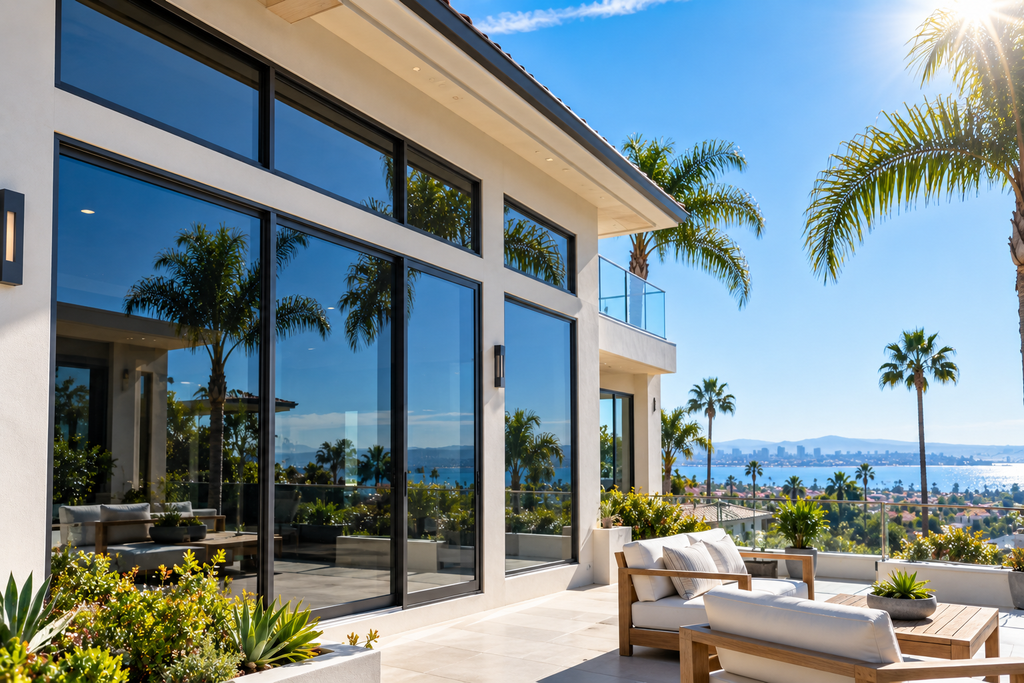
Dollar for dollar, window film usually delivers more energy savings per dollar spent because its low upfront cost means savings offset the investment faster—even though a brand-new low-E window may edge out film on raw seasonal performance in colder climates. Reducing solar heat gain through windows is one of the highest-leverage efficiency upgrades available, since window-related losses account for a large share of a typical building’s wasted energy.
For a building with functioning, well-sealed windows, film captures most of that available savings without the cost of new glazing. For a building with failing seals, rotted frames, or single-pane glass that’s reached the end of its life, the energy case shifts toward replacement, since no amount of film fixes a leaky frame.
Is Window Film as Effective as Low-E Glass in San Diego’s Climate?
In San Diego’s climate, window film gives you most of the practical benefits of low-E glass at a much lower cost, because the region’s mild winters make aggressive winter heat retention less critical than year-round glare, UV, and cooling-season heat control. San Diego doesn’t see the deep-freeze winters where low-E glass’s four-season performance edge matters most.
That means the cooling-focused strength of standard solar window film—and the added winter benefit of premium low-E films—covers most of what a San Diego home or business needs from its windows, without the disruption of a full replacement.
Should You Tint Existing Windows or Replace Them With Low-E Glass?
Tint existing windows when the frames and seals are sound, and you want fast, affordable heat and UV control; replace with low-E glass when the windows themselves are failing, single-pane, or already scheduled for renovation. The table below breaks this down by situation.
| Situation | Recommendation |
|---|---|
| Existing windows in good condition, want lower bills fast | Professional window film |
| Single-pane or very old windows with failing seals | Low-E glass replacement |
| Renovating or building new construction | Low-E glass (built in from the start) |
| Renters or short-term owners | Window film (no structural changes) |
| Tight budget, want quick ROI | Window film |
| Full remodel already planned | Low-E glass replacement as part of the project |
What Are the Downsides of Each Option?
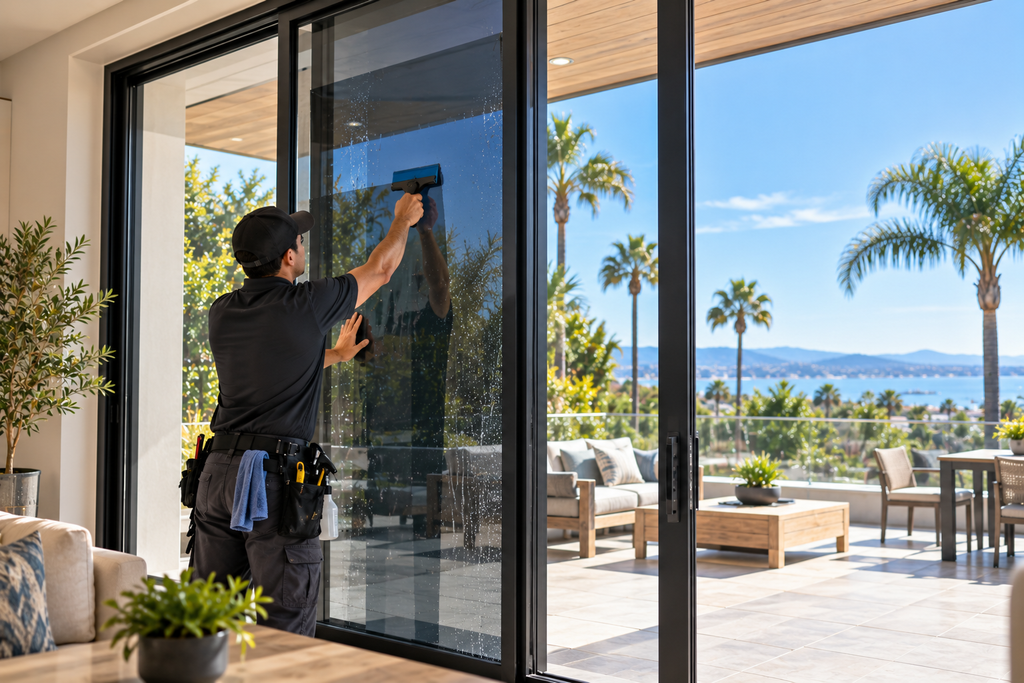
Window film’s main limitation is that it can’t fix a failing frame or seal and, on some standard films, provides less winter heat retention than true low-E glass, while low-E window replacement’s main downside is upfront cost and the disruption of removing and replacing existing units. Film also has a finite lifespan and can eventually need reapplication, while low-E glass is built into the window and typically outlasts the film equivalent by design.
Neither option is universally “better” — the right call depends on the condition of what’s already installed, your budget, and how long you plan to stay in the property.
How Long Does Each Option Last?
Quality professional window film commonly lasts well over a decade with proper installation and care, while low-E glass, being manufactured into the window unit itself, generally lasts as long as the window’s overall lifespan. One Superior Window Solutions customer reported film installed in 2017 still showing no bubbling, lifting, fading, or color change roughly six years later.
Why Choose Superior Window Solutions for Window Film?
Superior Window Solutions specializes in professional window film for homes, businesses, and vehicles across San Diego, offering residential, commercial, and automotive tinting with pricing starting around $325. The company’s site currently features a Summer Promo covering a free ceramic upgrade, a free skylight evaluation, and a free estimate for residential and commercial projects — worth confirming directly, since exact terms and eligibility can vary by project.
If you’re weighing film against a full low-E window replacement, a free on-site evaluation from Superior Window Solutions can show which option best fits your windows, budget, and timeline before you commit.
Frequently Asked Questions
Is window film as good as replacing windows with low-E glass?
For homes and businesses with sound existing frames, window film delivers most of the same heat and UV control as low-E glass at a much lower cost and with a faster payback. Full replacement pulls ahead mainly when the existing windows themselves are failing, not just underperforming on energy.
How much cheaper is window film than replacing windows?
Low-E glass replacement can cost roughly eight times as much per square foot as window film in comparable projects. On a whole-home or storefront scale, that difference typically translates into thousands of dollars saved by choosing film over full replacement.
Does window film work well in San Diego’s climate?
Yes. San Diego’s mild winters mean the winter heat-retention advantage of low-E glass matters less than it would in a colder region, while the cooling-season and UV-blocking strengths of window film cover most of what local homes and businesses need.
How long does professional window film last?
Quality film typically lasts well over a decade when properly installed, and some customers report a decade or more of use with no visible bubbling or fading.
Should I replace my windows instead of tinting them?
Replace rather than tint if your window frames are failing, leaking, single-pane, or already part of a planned renovation. If the frames are sound, tinting is usually the faster, more cost-effective route to lower energy bills and UV protection.
Does Superior Window Solutions have a current promotion?
The company’s site currently features a Summer Promo for a free ceramic upgrade, a free skylight evaluation, and a free estimate on residential and commercial projects. Confirm current terms directly, as other promotional pricing also appears across the site.
Ready to Decide Between Window Film and New Windows?
If you’re trying to settle the tint-or-replace question for your own home or business, the fastest path is a free, no-obligation evaluation from Superior Window Solutions — San Diego’s window tinting specialists for residential, commercial, and automotive projects. They can assess your current glass and frames, walk you through ceramic and low-E film options, and give you a real number to compare against full window replacement, all before you spend a dollar on new glazing.